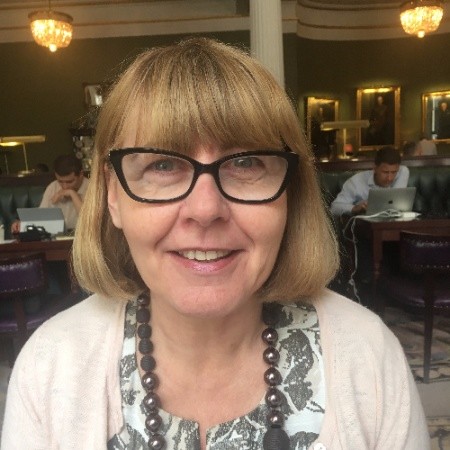
Janet Hawkes comes to the Swamp to share her insights and experiences from leading for 18 years inside Kent County Council in the United Kingdom. Leading inside Kent taught Jan the art and craft of navigating a political culture while providing services to the citizens of Kent. She managed significant culture change processes and programs. She speaks directly to what she learned from mistakes, how to develop future leaders and the importance of listening and responding to frontline staff. We end with Jan discussing her own personal and professional transition from Kent County Council to private life.
Jan’s Links
EPISODE 83
[INTRODUCTION]
[0:00:06] Announcer: You are listening to 10000 Swamp Leaders, leadership conversations that explore adapting and thriving in a complex world with Rick Torseth and guests.
[INTERVIEW]
[0:00:20] RT: Hi, everybody. This is Rick Torseth, and this is 10000 Swamp Leaders, the podcast where we have conversations with individuals who’ve made a determination in their life and in their career and work to use themselves to lead around issues that matter in the world. Social impact, what I would call work for the common good.
Today is a great example of that. I have the opportunity to have Jan Hawkes on the podcast. Jan, I’m going to give a chance for you to introduce yourself here in just a second. But in full disclosure, we should say that I have worked for you. You were a client and I was a consultant, so we have some history in working together. And Jan has been a longtime leader at Kent County Council in Southeast England. She has stepped back from that and is now freelancing and doing some other wonderful things, like traveling with her daughter. Jan, it is very great to have you here. I’ve been wanting to have this conversation for a while. So, welcome to the podcast.
[0:01:16] JH: Thank you, Rick. I’m really pleased to be here. For me, this is the first to do a podcast. So, it’s really exciting. We have worked together. I prefer working together than working for because none of us can do anything without each other.
[0:01:30] RT: Good point.
[0:01:31] JH: We have together in the past. And for me, that’s really important. How we do things together with people and not one for the other.
[0:01:39] RT: Okay. What else do you want people to know about you before we get started?
[0:01:43] JH: I’m Jan. Been working in the public and private sectors. I have one daughter. I’m married. My daughter is my world. So, I very much try having an only child, not to be a helicopter mom. So, I try and call back when I need to. Like traveling. The last couple of years, personal reasons, has prevented that. So, 2026 is going to be a year where we’re going to make up for the past two years.
I like everything to do with people and how we behave, how we behave to others, how we listen. I think in the modern world, we’re on all the time. We’re doing more than one thing at a time, but are we really present in the moment? And that’s really important to me. And working in public sector, there is that ethos for wider community and not just doing things for the organization, as maybe you do in private sector, which is money and figures. Doing things that are really going to be positive impact for people and communities.
[0:02:42] RT: Okay. So, you didn’t wake up and find yourself working in the public sector. You have a pretty diverse work background. Can you take us back a little bit to some of the earlier parts of your career? Because you worked not only in the private sector, but you also worked in some pretty exotic locales. Catch people up a little bit on your journey from relatively early in your leadership career that brought you ultimately to Kent.
[0:03:07] JH: In my early working in life, I live in Kent. Probably an hour plus commute to London, and that’s where my first jobs were in London. Various different guises, from British Rail, to Abby National, which then became one of our leading banks, to a property organization. Moved around a lot in my earlier career. Once I’d learned what I thought I could at an organization, I wanted to go somewhere else and expand on that and learn from a different perspective.
Laterally, I worked for the pharmaceutical sector as a non-executive director, and most of that work was dealing with United Arab Emirates, but mainly with Dubai, which was late 80s, early 1900s. So Dubai wasn’t the cosmopolitan city it is now. It wasn’t the holiday resort that it is now. It really was quite challenging.
And although I had dealt with the people before going out there to visit the first time, it was pretty scary. And I remember being fairly scared about going out to Dubai on my own when you heard about the cultures, very different culture. And it’s their culture, and you have to take account of that and be respectful of that.
And also, how they treat people, to how we treat people. In an office environment, if you’re given a drink, we naturally thank you, thank you very much. The dork for people. That really wasn’t acceptable at that time. People often knew the drinks were their workers. Goes back to working for rather than with. That was very difficult. I’m British. We say thank you all the time and quite rightly too. That was a very different culture. Respect of the dress. Make sure everything – arms are covered, legs were covered.
That kind of added to the stresses of being in that business environment. It was a sales environment, product divestment and acquisition, or MAU. And I think that’s where I learned about people respective of cultures and different cultures, and how you had to really work to bring the cultures and people’s beliefs together. One size didn’t fit all with that. And you had to do it and understanding the people, what motivates them, what drives them, to therefore be able to have that kind of business conversation.
[0:05:25] RT: Okay. And so you find your way back home. And help people understand, you made a move to work in the public sector full-time. What is it about that world, the public sector, that drew you to it and has been a nice match for you in your career?
[0:05:42] JH: I didn’t intend to end up in the public sector for the 16 years I did. Working in the private sector was very full-on. I had a young daughter, really long hours. 60 hours a week would probably be the norm, and did that for many years. And then my daughter was going into secondary school, and I felt needed me more at home. I traveled extensively not just abroad but across the UK as well doing 5-hour drive up to a pharmaceutical company or a packaging. Be there for 9:00 in the morning, spend all day, and then they do the 5-hour drive back home, and somewhere else the next day. It was pretty full-on.
My choice. I had a huge work ethic driven by the fact I love what I do. It was time for me just to work more locally. Ended up in the public sector, thought I’d just sort of take it easy for a while, and recap and rethink what I wanted to do. And I ended up staying, ended up promotion to various different jobs.
The county council set up an organization development function for the first time in 2012. I was seconded into that function. And that’s where I stayed until, well, a couple of months ago really. So that was my 16 years. And that was all about the people, understanding people, culture, behaviors. Leadership and management styles were my lead roles. And taking people with you. And there was massive, massive change in local government in England across that period of time. And it was fascinating work, but it was very rewarding work and work I thoroughly enjoyed.
[0:07:22] RT: Okay. When you and I came together, you had mentioned to me that you had a pretty clear view and philosophy around change management. And we should tell people that the work that we did together had at its core a conversation about leadership, which we’re going to get to here in just a few minutes. But for listeners who are in the world, whether it be private sector, public sector, change is a constant in their lives. Share with people your top view of change management, the value of it, the importance of it, and a little bit maybe even about how you go about organizing it when you’re going to introduce change into the organization for people.
[0:08:00] JH: Well, as I said, my work’s been centered on organization strategy, leadership, strengthening that leadership capability, but fostering a culture where people can thrive. I like to think I take a people-first approach, and that’s not just a twee set of words or rhetoric. By paying close attention to the culture that currently exists. The engagement. How engagement’s done and the capability. And then creating an environment where leaders understand their influence, understand the environment in which they’re working. How they show up as a leader impacts people, good or bad. And turning that into how you can lead within influence. Act with integrity, really, and develop the resistance that you may get to change because you’re taking people with you right from the very start, which starts at clarity, which isn’t always there. I think a lot of work, there’s an idea, and think, “Okay, we’re just going to go and do that,” but we’re not clear what it means for people on the impact on what they need to do and how they need to show up.
[0:09:06] RT: How do you rectify that? How do you help and support the people who have the voices of leaders in the organization to be more focused and bring people along in the process of the change if they’re not skilled at that or they haven’t given that much thought? What’s your approach to that?
[0:09:23] JH: I think it’s listening first. Listening to leaders. Connected in with a cross-diagonal of staff working in that environment and outside of that environment. What their view is and where they’re working. The leadership. How they receive the leadership? Understanding that environment. What the leaders may perceive they’re leading in and how the staff are receiving that.
In today’s context, leadership for me isn’t just about authority as it was years ago. For me, it’s now about stewardship, adaptability, and creating conditions where others can succeed. I like to feel my role has been to help leaders embrace that mindset and translate that into practice.
For me, value-based leadership is really important. In organization, we hear a lot of rhetoric, psychological safety, values-based leadership. Sometimes it’s just that. Great rhetoric on the slide, rather than putting that into practice. For me, it is about putting that into practice. Leadership for me is a collective responsibility, and I hope my work has reflected that.
I’m passionate about developing cultures where people feel valued and empowered. Most importantly, where people feel safe is when leaders create that safe environment, the motivation levels go up. They believe in what they’re doing and the role they’re playing. For me, that means creating spaces for others to contribute, listen actively, and ensuring that decisions align with shared purpose and common goal.
I think the active listening we don’t always do in today’s world of work because of technology. We’re on Teams meeting. But while we’re on a Teams meeting, we’re probably looking at emails coming in. We’re reading Teams messages that are coming. So we’re not really present in the moment as we would be in a face-to-face meeting because you wouldn’t be typing emails or you wouldn’t be typing responses to team messages.
I think largely we’re not present in the moment. And so we’re only hearing bits of conversation because we’re doing two or three other things all at the same time. We’re not present in the moment. That’s why I use the word active listening. You can’t be actively part of a meeting if you’re doing one or two things at the same time. You’re not really hearing the conversation.
[0:11:44] RT: Okay. In your work, and this is, I think, an area and a focus that we shared together in the work that I helped do with you, is you’re after building capacity to lead, so you have more moves to make and more capacity to bring people along. So, what’s been your experience around the work in an organization? Because this takes time. How do you help people actually find the time to do the work of building and practicing and developing new leadership muscle, both for themselves as a leader and also the way in which they mobilize and bring other people along through listening or taking chances and risking? How would you go about doing that?
[0:12:29] JH: For me, I think effective leadership starts with clarity. Leaders need to be very clear before they start engaging and communicating about the outcomes they want to achieve, and communicate that vision in a way that really inspires others. Without clarity, teams lack direction and alignment. Without clarity, people make up the gaps, and that can cause conflict.
Role modeling really is important in leadership. Clarity alone isn’t enough. Leaders must role model the behaviors they expect, especially in the moments that matters, because we all have stressful days at work where we got many things going on. We’re being pushed and pushed. And how leaders show up in those moments really, really matters because that’s how you take people with them, and that’s how you get the role modeling.
During times of change, challenge or uncertainty, these are the times when people look to leaders for cues on how to act and the values that they should uphold. It’s really important. It’s not about where you want to get to. It’s how you get there and how leaders can inspire others to take them with them.
That role modeling, I think it starts at self-awareness. We don’t do it enough to understand ourselves as leaders. Self-awareness, it really underpins your communicating, your listening. You understand your impact as a leader, your strengths, but also you understand where your blind spots are. And we all have biases. We form an opinion of someone within probably 5 seconds. And then we can take that bias with us unless we understand the biases we hold within ourselves.
And then you can adapt your approach. By adapting your approach, you build trust. This is about being intentional for me. Knowing where to step forward, when just to listen, and how to create that psychological safety. But you’re listening with open ears. You’re not listening, “Yes, but I’m going to do this anyway.” You’re really listening. Because leaders obviously are working at a higher level. Unless you engage with people actually doing the work, you’re not really going to get a sense of what’s happening on the ground.
And I’ve said this in public sector that I’ve worked with, meetings by and large are all the same grade of people, same grade of leader, same grade of managers. And they’re talking about a change or doing something differently. Rarely do you get in those meetings different grace from people actually doing the work. And they’re the nose. How it actually happens? How the systems work? How the systems talk to each other or don’t talk to each other?
We make decisions at a higher level without really engaging those. And listen to those actually doing the work, and what could improve things for them. I think public sector is changing, but it’s still quite hierarchical. And I think private sector is probably the same. So you talk all at a level, and you get far more impact, and knowledge, and information by going right the way down to people doing the work and how their day is really affected, and what could impact them. And that productivity, you increase that. Sometimes we don’t listen or communicate at all different levels. I think we’d learn a lot more from each other if we did that.
[0:15:54] RT: Okay. And then along comes Jan Hawkes. And you shared with me a phrase that I had never thought of about you before, but when I read it the other day in your handwriting, I thought, “Yep, that’s Jan.” Which is you called yourself a professional disruptor.
Okay. So, let’s go with the structure in the current cultural process you just described, where you don’t have all the voices in the room for whom people know stuff about how the system works, but they’re not there, etc., etc. So the status quo has a pretty good chance of staying the same. And then along you come as a professional disruptor in your role. Share with people how you disrupt the system so that it stays functioning, but does start to season itself with different voices or different ideas, or voices get heard. What is your craft of disrupting systems and organizations so that they improve and get better?
[0:16:47] JH: We do use that term and have used that term, professional disruptor. I don’t mean that just for the sake of let’s go in and disrupt everything. OD leadership is all about people. And you’re doing a change because you want to make things better. Public sector, largely for communities you’re serving.
For me, it’s understanding the habits that are currently being played out. How things are done?How things are led? And the muscle memory. Public sector, sometimes people have been around a long while, and their muscle memory is, “Well, we’ve always done things this way.” Yeah, I’ll listen to you rather passively, but we’ve always done things great, or we’ve always led in this way.”
For me, leading for the common good means looking forward, anticipating what’s coming, and helping others to see around corners. I had read that phrase in a strategic leadership book the other week, and I thought that was really good. It’s how you look around corners, not just in front of you, or what’s coming around the corner. That requires curiosity. It requires courage to pay back to a leadership team. Could you go and engage wider down the system?
You have to be willing to question assumptions and invite challenge, and that often brings with it uncomfortableness. So that’s why I talk about being a professor disruptor, because you have to challenge all those thinkings and those assumptions. Because we’ve been doing things for a long while or leading for a long while, sometimes our muscle memory keeps us doing things in the same way. You have to challenge the assumptions and questions and invite challenge, as I said.
And it’s involving people. Creating space, creating dialogue, and challenge. Ultimately, for me, disruption isn’t about breaking things, but it’s about creating clarity and fostering adaptability, ensuring we’re prepared for what’s next by understanding where we are today. And that’s why I focus on listening and learning, encouraging others to test ideas because that’s how we can move forward together.
[0:18:53] RT: I’m imagining there’s people who are junior to you in your career, both as a teacher of these ideas in the organization and also people who work with you. I’m reminded of a line, and I don’t know who said it, is first you do the thing you’re afraid of, then you get the courage. Meaning some people think they got to be courageous first before they can do it. But it’s really the other way around.
And so you’re advocating that people step themselves out of their comfort zone a little bit and do these things that you’re talking about. How do you in the organization support growing that, let’s call it loosely courage, to take actions that they’re a little uncomfortable with? How do you support the culture and the environment so that people feel like they can do that without getting hurt or at least not banged up too much?
[0:19:43] JH: I think that’s a really great point. And I think a lot of organizations talk about inclusive leadership. One of our values was about being brave. Be brave to come up with new things. Challenge the status quo. But it’s how as an organization you live those values. Because if you’re asking people to be brave challenging the system, then when they do come up and do step up, it’s how you’re going to support them in doing that. Because sometimes you do things differently. They don’t work. So you have a great idea, you test it out, and it doesn’t work. But those people have been brave. They’re living the values.
So then how does a leader do you show up in those moments and support them? Don’t worry, we’ve tried it, but we have got some lessons we can learn from it. We haven’t lost everything. Sometimes, when people do try something new and it doesn’t work, leadership fouls them because they don’t go – don’t do the don’t worry. What can we learn from it? And how we can apply those lessons going forward?
And that’s about values-based leadership and why, for me, values-based leadership really is important. It’s about that listening and learning. Creating that psychological safety so people feel heard. They’re willing to test assumptions, willing to challenge beliefs in the understanding that they will get supported.
And then it goes back to old leadership, which more command control, where modern leadership for me is very different. It’s about purpose-driven, collaborative, not controlling, setting the outcomes you want and then just letting people go and deliver those outcomes.
Where they do it and when they do it is up to them. We’re not 9-to-5 anymore. The world of work has changed. So, it’s really balancing organization decisions. It’s about stewardship and not control. It’s not about status, but just creating that organization value and culture where people are happy to test assumptions and try new things. And you will deliver sustainable impact by doing that.
[0:21:53] RT: I know you’re familiar with adaptive leadership. And I’ve always thought the distinction made in that point of view of authority versus leading, meaning leading is a choice in an activity. It can come from anybody in the system. And the organization needs authority as well to give guidance, and provide resources, and create safety, etc., for people.
But I often think that in organizations, people don’t have those distinctions. So, they have a one-way switch around command control. And there are people in the system who could raise their hand and choose to lead on something, but they don’t even have the concept of that, much less maybe the skill. How do you informally and formally build the capacity to lead in the organization so that people have more leadership muscle after a period of time? What’s it take to do that broadly programmatically in an organization from your experience?
[0:22:50] JH: I think that’s talking to people at different levels, talking to people involved in doing the work, managing the work, and leading the work, because they’ve all got something to bring to the table if you’re doing a transformation. Good leadership today looks very different. Starts, as I said before, with clarity of purpose.
But leaders then must articulate not just what needs to be done, but why it matters. People want meaning, not just instructions. They have to feel it. And why it’s important. And the important role they have in whatever transformation, large or small. What impact is to them and the role they’re playing? It’s about collaboration and not control. How you empower people? Really collect those diverse voices, I think we are much smarter at doing that. I don’t think we’re there yet to where we need to be. Really listen to diverse voices. Invite them to challenge our assumptions and create spaces.
I use cocreation, but I think that’s a bit outdated. It’s just create conversations with different people at different levels, different parts of the system, and learn from each other. Because then the best ideas often come from the edges. They don’t come from the top. Good leadership, as you know, is about adaptive. It’s about looking forward, anticipating change, looking around corners, as I said. It’s deeply values-led. Leaders role model, the behaviors they expect, especially as we said before in the moments that matter, during change, during challenge. Act with integrity, consistency. Because trust is built through actions, not through words.
By doing those things, listening, learning as you’re going, your assumption might be wrong. Be vulnerable. Say, “I didn’t realize that. I’m happy to listen further. Let’s change it.” Because no one person has all the answers. It doesn’t matter what grade you are. You might be a CEO. You may be a director, but it doesn’t mean you have all the answers. That listening and creating that safety.
In short, for me, good leadership is about influence. It’s not about authority. It’s stewardship, not status. It’s about creating conditions where people can thrive and input, and feel comfortable in doing that. And then you deliver impact for the common good. That’s, for me, what leadership means in the modern world.
[0:25:22] RT: Okay. So that’s a nice entry point here. In our notes and exchanges, you mentioned a program that you were involved with, the special needs, special education and needs program for children in Kent. That program, as near as I can understand in our brief exchange, turned out pretty well. This is honestly a chance for you to connect the dots and brag a little bit either for your team or the work of Kent. But to give people context, what the program’s purpose was and how it went, and what the outcomes were, and why do you view that as a success for the organization?
[0:25:55] JH: SEND, special education needs, children with special educational needs. All local authorities are responsible for their area to make sure those children with complex needs do get the support that they want, either through a mainstream school or in a special school, depending on the complexity.
Kent was inspected and reinspected, and the reinspection wasn’t good. So we hadn’t made enough progress from the first inspection to the second. Not saying anything that isn’t confidential because it’s out in the public domain. It was a spectacularly disappointing reinspection.
The first thing to do was understand the culture, what was going on in the system, what were the beliefs and assumptions that were people were making. And I always do that by talking to leadership. Yes, by then doing a cross-diagonal interview process with all grades, part-time, full-time, all grades across the system. And then collectively bringing that together into report that sums up the current culture. And that’s always a fascinating piece of work to do.
And what we found of with the system is there’s inbuilt, “We know what we’re doing. We’ve done it for years. Just leave us to do what we’re doing. But we need more money, and more resources, and more time.” But does the world change? Changes, and technology changes. The world of work we have to change with that. And I don’t think the system was changing enough. There was a failure at the then leadership.
We had new leadership come in. For me, probably the best leadership team I’ve worked within the county council. Very clear. Instructed where they need to be. Listening where they need to be. The work was overseen by the Department of Education, naturally, because there were some failures in the system.
And we turned that around in 18 months to two years because we worked through the culture where the culture needed to change, where people’s beliefs and assumptions needed to change, where they needed leadership, where they needed that clarity. The clarity was given, the leadership was given not just from the leader of the whole system, but her leadership team underneath her. And they talked with one voice. They may have had their challenging conversations, but to the workforce they talked at one. That clarity was there. The honesty about where the failures were, why the reinspection was so bad, and what needed to be done to put it right.
We came up with a culture growth program because it wasn’t just about doing things differently. The culture had to change because the mindsets were very fixed mindsets about how things should be done. The approach taken was a cultural approach for the workforce, which was signed off at senior leadership. We held fast for that process.
There was one Christmas, we had a conversation with the director. We think, “Okay, are we going to get there? Okay, let’s have the Christmas break. Let’s come back. Let’s trust in the process. Carry on what we’re doing.” Constantly reinforcing, rewarding where things were changing given that recognition, but also picking up where things weren’t changing enough. Understanding why and making sure that change happened.
And we got an improvement notice was disbanded. D of E were very happy. Removed the improvement notice in its entirety. And I think that worked because we did it through people and with people. We got all the managers together at one layer, then the next layer down, and the next. And we got them to know each other and how they connect as a system with the leadership in the team every five weeks.
They felt connected to the leadership, and the leadership felt connected to them. They had their chance to say where the systems wasn’t working. The input on this system, but then they had to duplicate that somewhere else, or where the systems talk to each other. How their working day was, and how we could help improve that.
It really was a whole system environment working together. It was not easy. It was probably one of the most challenging work I’ve done because it was children with special needs, and we had to change it. But it was most rewarding. Managers working together and staff working together for the collective good of the communities. It really was a powerful piece of work. Understand your culture and work through your workforce with your workforce.
[0:30:40] RT: I want to go back into what you just said for a moment around you. In that period coming into the Christmas and everybody take a break, and we’ll return, and people are tired, and they’re exhausted, and it’s not working, and reports aren’t great, etc. How did you take care of yourself? Because you have a Christmas break, you’re not there, it’s not working, you got to go back, you got to find a way to get people back in the game and keep moving. How do you take care of Jan so that you do have the energy, and the brain power, and the juice to get them going again? Because they need somebody to lead the way in those moments. They’re tired. I’m interested in how you take care of yourself before you can take care of them. What do you do for yourself?
[0:31:30] JH: I think it’s a great point. And I think as leaders, we take everything on our shoulders, and especially when you’re leading strategies or change, because it’s all about people. And you’re doing something – especially in local authority, you’re doing something for the communities that you live in. And I don’t always think we take care of ourselves, reflecting.
Now, having that environment, I didn’t take care of myself enough. But my work ethic comes from my father. My work ethic also comes in loving what I do and taking ownership of that, and really want to see things through. But I think you look after yourself by talking to people. And when I had that call with the director, we both felt the same. This has been exhausting. And are we really getting there? We’re putting everything into this. It’s really, really important. And are we getting everywhere? And of course we were. But sometimes you can’t see the little changes because you’re looking at the bigger picture. And it’s understanding where people start talking to each other. People from one team are connecting to another team because they’re suddenly getting to know each other.
And I think it’s just pausing and having the Christmas break was brilliant for me because you had that time, forced time away. We probably wouldn’t have taken a break if it wasn’t Christmas. We’d have carried on plowing through. But I think having those few days away, what that did was took you away from the everyday kind of firefighting. Cleared your mind a bit. And then when you come back, you had that different mindset because you’d been away from it. And I think that’s a lesson it taught me. Don’t always carry on. Don’t always carry on with something. Sometimes you have to step away. Go and do something else. Whether that’s for a day, a week, go do something else, and then come back because you see it with fresh eyes.
[0:33:20] RT: Yeah, it’s a very familiar metaphor. This deal about getting off the dance floor and up on the balcony and seeing what’s going on. And before you go back down to the dance floor and start to dance again. I think you identify a real challenge for people is their ability to step away from the active work that they’re doing and just look at it from a different perspective. And it’s a challenge. My experience is it starts with the senior leaders. Making sure that people know that that’s not only an acceptable move, it’s probably an essential move. And we need to step away once in a while and see what’s going on.
I was getting ready for this. A question came to me. Politics is always at play in an organization as part of the culture. But you work in a political organization. I mean, the nature of the organization’s purpose is to politically administer services for the common good. I just was struck by, is there a difference for you, or is it more intense? Or what is it like to work in a straight-up political environment while you’re trying to deliver services to people who need them? And is that much different than life in a commercial organization?
[0:34:31] JH: Great question for me because I worked on the people side of things. So strategy, transformation program, quite significant. Transformation programs change, especially after COVID. We had to rebuild after COVID. How we worked before COVID wasn’t going to work the same after COVID. It’s just understanding that. And if you make it about the people, if you make it about doing the common good, what you’re doing is common good both for the workforce and the communities.
Kind of part the political to some degree, because political side of it is your counselors. And they decide the strategies, they decide the approach they want to take for the counter council. But as an employer of the counter council, you’re about the people, and you’re about how you translate those strategies in delivering for the community.
I’m honest, I kind of part that. That wasn’t my problem. Political conversations happened over here. I was about those strategies and how you did it through people and with people. I tried to not let that get in the way. Of course, in conversations, you had to be very careful, very aware, politically aware. You have to be very politically aware of language and how you’re approaching things, but you don’t let it get in the way of delivering that outcome and impact.
[0:36:01] RT: Got to find a way.
[0:36:02] JH: Yes, you have to be aware of it. You have to be very politically aware of language and right language, but try not to let it get in the way of doing good.
[0:36:13] RT: So, I want to change our orientation here a little bit in the time we have left. You’re further down the road in your career, and you’ve learned a lot of things about how to navigate life in an organization and how to use yourself in an organization. For people who are further back on the journey, following along with you, what are two or three essential lessons that you’ve learned that you think you could pass on to that generation of future leaders or people who are young leaders that might aid them in their journey? Lessons learned. What counsel do you have? Wisdom is really, I think, the conversation we’re in here.
[0:36:52] JH: For me, I was all about culture, leadership, management, people, transformation, change that would translate in something for the communities, improvement. I think you need to focus on enabling others to succeed. It’s not about you. It’s how can you help others to succeed, and that’s by inclusive environment.
Inclusion is a language that we use a lot. How much that’s really understood? We had an inclusive model at the county council that really helped us focus our thinking on inclusive environment, which means you have to listen deeply. And sometimes we’re talking to someone, and they’re veering off. And you think, “No, no, no. That’s not where we’re going.” But actually, we have patience and listen a bit more and go into that deep level of listening.
You can help align decisions with the values, but also have a better long-term impact. I think it’s listening more. Building those strong cultures, building trust. And if you haven’t got psychological safety, you can’t have trust. That’s really, really important. And delivering outcomes that, yes, matter for the organization. They’re going to have that positive impact for communities.
It really is about bringing people together, but not people on a hierarchy level. Listening to the people that are doing the job. Listening to people that are receiving the service. What do they like about it? What don’t they like about it? What’s working? What isn’t? Because then you do get that deeper level of understanding.
I like to think I did listen. I think I could have listened more and listened more deeply. I think at meetings, I could have been more present in the moment and not trying to do one or two other things all at the same time because it was a virtual meeting. Sometimes there’s a tendency for people to have cameras off, because they have the cameras off because they can go make a cup of tea or they can do some other work while the meeting’s going on. And that’s not respectful of your colleagues or the people you’re in the meeting with. I think being present in the moment is really important in today’s world, where we always seem to be doing more than one thing at a time. We just need to be a bit more present and respective of those people around.
And park egos. I think egos have no place in modern leadership. Seen a lot of egos over my time. It’s about parking your ego, making the best of your personal agenda. And the information you have, share it. Don’t hold information because you think you have power if you don’t share. Share it. See what other people think. Much more impactful.
[0:39:40] RT: We’re coming down to the end here. I have a couple more personal questions. What are your gifts and talents that have stood you well in your life and in your work? Things that Jan Hawkes came into the world with that nobody else had that combination? Your superpowers? What do you lead on under pressure that you know can get you through and be useful in the world?
[0:40:03] JH: I lean on the basis I work is around doing right. Doing right by people at all levels, communities, staff, managers, leaders. Trying to do the best. Pushing the system where you think the system isn’t doing the best for all levels of people. Collaboration, not control. I don’t think power has a real place in modern leadership.
Being adaptable. If people are challenging your assumptions, be adaptable. Listen, but listen to a point where you’re learning, not listen and go, “Well, I’m going to carry on doing what I was going to do.” Really listening to a degree that you’re learning from what you’re hearing.
I think self-awareness and humility. We’re all part of a bigger system. We all want to be treated fairly, respectively. Have that humility, not just for yourself, but for others, too. And you definitely park your ego. This is not about you. Because one person can’t change the world.
[0:41:14] RT: Last question. You’ve now left Kent. What’s ahead for you?
[0:41:17] JH: I don’t know what’s ahead. If I can help anyone listen to where they want to get to, playing back to them where I feel they are now, where their culture is. And, actually, if you want to do this, you have to change this in the environment first. Because change is people. And you won’t change unless you take people with you. And you can do big events, and you can say this is what we want to go, and everyone will nod. But if you’re not careful, you don’t understand the environment and the culture, when people go back to their desks, they just carry on doing things in the same way. It’s just a passiveness nod or yes in a big event. But when they go back, they carry on the same because that’s the way they’ve always done. That’s their muscle memory. If I can help in that way, absolutely love to.
Having a few more holidays, spending more time with my husband. And he hasn’t seen much of me over the last few years. So we’ll see how that’s going to pan out. We both talked about when I retire, I would do this. Sort of not retired totally. But, yeah, just spending more time together. Careful what you wish for is the saying, isn’t it? We’ll see how that stacks up.
[0:42:27] RT: Okay, last question. Have I not asked you anything that you came into this conversation wanting to put forward, or any point of view, or anything that you think you want people to know before we bring this to a close?
[0:42:39] JH: No, I don’t think so. I think we’ve talked about leadership. We’ve talked about culture and environment, creating conditions where people can thrive. And that’s really quite saying and rhetoric. And I always say I read slide decks, and I think that’s brilliant. But actually, it’s just a brilliant slide deck because people read it. They sign it off, and no one goes back three months later and six months later and say, “What happened to that?” Slide decks are great things, aren’t they? And beautifully presented. But unless you make use, unless you put that into action, that rhetoric is just on a slide deck. I think it’s just turning rhetoric into actions. And I don’t think there’s enough for that.
[0:43:29] RT: Okay. Hey, Jan Hawkes, thank you for this conversation. I truly appreciate seeing you again and being able to connect and talk. Thank you.
[0:43:39] JH: Great to connect in, Rick. Thank you very much.
[0:43:43] Announcer: Thank you for listening to 10000 Swamp Leaders with Rick Torseth. Please take this moment and hit subscribe to follow more leadership swamp conversations.
[END]
Jacob Mayne is an Englishman living in Paris. Immediately we know he’s on to something wise. He is a founder and Managing Partner of NewAngles Consultancy. His work is focused on sustainability and change strategy. He is also an Affiliate Professor at Paris/HEC School of Management and a visiting lecturer at Science Po, Paris. Jacob’s primary goal is helping leaders integrate positive, sustainable business practices into their organizations.
He balances his professional focus with a love of the arts, music and a gift for writing. He is a joyful spirit with glint in his eye and deep commitment to helping improve the future of planet earth.
[INTRODUCTION]
EPISODE 05
[00:00:06] ANNOUNCER: You are listening to 10,000 Swamp Leaders, leadership conversations that explore adapting and thriving in a complex world with Rick Torseth and guests.
[INTERVIEW]
[00:00:19] RT: Hi, everybody. It’s Rick Torseth. Welcome back to 10,000 Swap Leaders, a podcast that explores what it’s like to make a decision to choose to lead in the swamp of messy, gnarly, wicked problems that plague the Earth.
Today, I’m with my friend and colleague for about 13 years, Jacob, I’m going to guess of time, who I’ve known for a while. We’re peers in the consultancy business. I asked Jacob to come on the show, because he’s got a lot of experience; professional experience, both in the corporate sector, and in now in his own consultancy. He has oriented himself to some particular strong missions that take big challenges to resolve. Jacob, welcome to the conversation.
[00:01:04] JM: Thank you.
[00:01:04] RT: It’s good to have you here.
[00:01:05] JM: It’s lovely to be here. I’m looking forward to discovering what it’s all about.
[00:01:09] RT: Yeah, me too. I got to say, there are many reasons why I wanted to talk to you. When I thought about it, the thing that keeps jumping out at me is ever since I’ve met you, two things. One is, you always have a glint in your eye and a sense of possibility that the world can work. Now, you may not always think that in your private thoughts, but that’s always how you show up in my experience.
© 2022 10,000 Swamp Leaders 1
SL 005 Transcript
Then secondly, you’re one of the earlier pioneers in my history, who was speaking about issues of sustainability, when I would say, they weren’t quite in fashion yet. We are certainly not on the edge of COP26, and all the things that we know now. I hold you, rightly or wrongly, in the vanguard of trying to formulate and stimulate this conversation about sustainability. I know that informs your work, and we can get into that. Let’s begin with you telling us wherever you want to begin your story, about who you are, and what you’re up to.
[00:02:10] JM: Thanks, Rick. I like the glint in the eye thing. If only that were true, but it is true in the sense that I am blessed with an optimism, which keeps me going. If that’s visible, and if that gets transmitted, that’s fabulous. I think, I am just in the process of saying goodbye to my parents, and my mother in particular.
I think, it comes from upbringing. I think, there are just people who believed that if you played things right, for the most part life would come and meet you and coming towards you. I believe, that through my own life experience as well, but I’m pretty sure I was brought up that way. I think, it’s probably a driver in this tackling your swamp, these gnarly problems as you just called them a minute ago.
If you haven’t got this innate optimism that it’s worth carrying on, despite the despite the swamp, then I think, you find other things to do, because it’s a painful process. There has to be an inner reason to keep going, I think.
[00:03:37] RT: Go ahead.
[00:03:39] JM: Yeah. Well, you were just saying, what’s on the menu for me at the moment, apart from my private life and my family. The menu at the moment is climbing this very, very slippery mountain, which is about leaders and followers, and how people manage to be successful in getting others to move along in direction that they’re thinking about. I’m tackling that from the sustainability point of view. I think, many other people are tackling it for all kinds of reasons.
My particular menu at the moment is what is different about sustainability as an issue and particularly for business. Because I am business-focused. Not that I like business. We’ll
© 2022 10,000 Swamp Leaders 2
SL 005 Transcript
probably come back to that. I’m not a business-like person, but I’m business focused, because that was where I spent 20 years of my life. I consult to businesses. For me, sustainability means sustainability for business, and many other aspects of it.
The leadership in a business context is an airport bookshop subject. Airport bookshop subjects, you have to be extremely optimistic to actually get anyone to take them seriously in the real world. That’s what I’m struggling with at the moment. Getting people to look seriously at how their whole model of what leadership is about might be inappropriate, or fit badly with the challenges that we’re facing in business and sustainability right now. That’s my frame at the moment.
[00:05:25] RT: Okay. If I understand what you’re saying, part of the work then is to A, you have to disrupt and disappoint the airport model, book input, and attempt to replace it with something perhaps more rigorous and challenging and harder to absorb and integrate.
[00:05:43] JM: Yeah. I think that’s a good way to put it. It’s not to throw away all those books. It’s a facetious label to stick on the tens, literally tens of thousands of attempts there are, out there in printed form, or digital form. To define what leadership is about is something that the western world is totally obsessed by. In other parts of the world, reckon they’ve had it taped for the last 2,000 or 3,000 years thinking of no country in particular, but naming China for one. It’s not a question what leadership is about.
In the West, it’s been a question for a long time. It remains in question. There are 15,000 or 20,000 answers to that question. Rather than try to reinvent that like an airport book, what I’m struggling with is, how do you get down to the personal, personal definitions of leadership that everyone has deep inside them. Everyone who’s interested in working with others, has got some definition of leaders, leadership inside them. They’ve got an operating model of leadership. If you’re interested in working with others, leadership comes into it from day one. You want to work with others and you want to go somewhere new, somewhere better. That’s where leadership starts. What is different about going somewhere new, or somewhere different that’s about sustainability in business? That’s my current obsession.
© 2022 10,000 Swamp Leaders 3
SL 005 Transcript
[00:07:18] RT: Okay. Do you mind if we break apart and explore your work in sustainability first, and then your thoughts about this piece you raised right at the beginning about a leader bringing people along, in this case, in the work of being, creating more sustainable organizations? Because I think, it’s that connective tissue, that’s really where the rub is, and where the challenge is, and where you’re spending most of your time, it’s my understanding. Let’s start with, why does sustainability as an issue hold your attention, independent of the leadership for a moment? Just try and hold it in isolation and give us that context.
[00:07:57] JM: Thanks. That reminds me. Thanks, Rick. Because that reminds me of you – in your polite introduction, you’re talking about me possibly being a forerunner, in the sense that I was getting a 100% involved in that back in 2007. I just wanted to say that I consider the real forerunners to be the people who were working with the Club of Rome and doing limits to growth. There are people going back to the 17th century, who were thinking about how do you steward and look after natural resources, like forests in Germany in a sustainable way, without using the German for sustainability? But they were thinking about how do we do this in a sustainable way for future generations.
I’m a long, long way from being a forerunner. I would say, that the current movement, the current awareness, linking it to climate change, which was not the case in the 17th century, but linked to climate change, and the threats to our environment, that goes back to the 1970s and the 1972, Club of Rome report, and to the Meadows is the people who model their systems with human –
[00:09:13] RT: Donella Meadows. Donella Meadows, you’re referring to, correct?
[00:09:15] JM: Donna or Donella Meadows. Yeah. She was the one who went on longest with it. They revised that. The whole thing has been revised in the last 10 years or so, but it is producing results. It was producing results in 1970, which are happening today. There was a tremendous piece of forerunner work, and Silent Spring with Rachel Carson, and so on. That was happening with against DDT, the use of DDT, spraying kids with DDT and so on. That just revolt against the blindness of the way we do things with chemicals. That was in the 1970s, throughout 1972, again, I think with her.
© 2022 10,000 Swamp Leaders 4
SL 005 Transcript
Those are the people who are real forerunners. They were out on their own. What I was doing was just waking up, because people like Al Gore was making a film called An Inconvenient Truth, or Nicholas Stern in the UK was publishing the report on climate change and how little it would cost to put that right in those days in 2006. That’s what woke me up. It’s just things going on. I left the company. I was out on my own looking more at the world than I was used to when I was within a company. One of the important things about being in a company is it stops you looking at the world. Your world becomes –
[00:10:33] RT: Say more about. Yeah, get into that.
[00:10:38] JM: Yeah. Well, the advantage of being out on your own scary, though it is, is that you’ve got really no option, but to look at the world squarely, insofar as that’s possible for a single individual, paradigms and all that. To look at the world and try to make sense of what’s going on in the world, that’s what comes when you operate as an independent, as you have lived yourself.
Working inside the company, we can all feel it with our clients. Those of us who are consulting from outside, the company becomes – in a large company, but even in a small one, the company becomes the world. You actually interpret life and existence in your daily being in your company terms, in your organization’s terms. This is why change is really tough.
[00:11:28] RT: Yeah. For people who are listening, who may be inside and we’re outside, I would emphasize not only what you’re saying, but that world orientation is influenced not just by tactics and strategies and grand business schemes, but the language and the currency and the vibe of the organization that you inhabit 12 hours a day, five days, six days a week, 365 days a year, year after year after year, it oozes into you, in some ways, unbeknownst, and informs how you begin to think. I think, it’s a comprehensive absorption. You take over in some ways.
[00:12:07] JM: Well, yeah. It isn’t something evil or strange. It’s the way we operate to find common ground with those around us. That common ground is let’s make sense of the world. You’re probably a fan, like me of Karl Weick, Making Sense of the Organization. Karl Weick says, “Companies, organizations, where the private sector or public sector, they are actually
© 2022 10,000 Swamp Leaders 5
SL 005 Transcript
machines in which we interpret what we did yesterday to give it meaning.” That’s actually what they’re about.
The P&L is just a detail. Is something that we can sign up to as a pretext, or the brand. We can talk about that at dinner. What we’re doing during the day is we’re looking at what we did yesterday and making sense of it today. We need this apparently, as human beings, whether we’re an independent consultant, or a person, a salaried employee, we need to get together with others and make sense of the world. An organization is actually a tremendously effective way of doing that. The consequence of doing that for a long time in one organization is that you start telling yourself the same story over and over again.
[00:13:25] RT: Same story over and over again. All right, so draw us back then to your sustainability is informing greatly how you spend your days, your times your work, the way you go about wanting to have impact in the world. Let me change my characterization of you from an early pioneer to a worthy grabber of the torch from Al Gore to Carrie [inaudible 00:13:45]. It is fair to say, to stay in the metaphor, you’ve been burying this torch for a long time, and you’ve learned some things.
[00:13:54] JM: When you go the torch, just be careful to grab it – grab the right end. [00:13:58] RT: Grab the right end of it. What is it about this issue that draws you in and keeps
you in, in spite of the difficulties? What do you care about that matters so much here?
[00:14:11] JM: Well, I’ll give two answers to that, because it’s fun. I really enjoy your way of playing with these things, Rick. I’ll give two answers to that. The first is to say, well, clearly, it’s my way of making sense of my life. The reason I get deeply engaged with it is because I’ve told the world, this is what I’m doing. That is self-reinforcing.
[00:14:33] RT: You publicly put a stake in the ground for all of those [inaudible 00:14:37].
[00:14:38] JM: Made a company whose tagline is ‘change business for good’. Every time I’m handing out that digital business card, I’m saying, “This is what I do.” It’s like saying, I sell Lipton tea bags. I work for Unilever. In other words, it’s my way of making sense of my life. There is a
© 2022 10,000 Swamp Leaders 6
SL 005 Transcript
purely Vikian response to your question, which is, is because I’ve said that’s what I’m going to do.
Then there’s a more rational way of doing it, which is everything I know about, which isn’t very much. Everything that I know about what’s going on in the sustainability field, which I’ve been looking at for 15 years in a serious way, everything I know tells me that we’re not going to make it. That we are not going to pull out of the curve. I was watching Sully, the film Sully the other evening. Clint Eastwood film, about the guy who landed a plane on the Hudson. He had dreams at night. He had dreams at night, while he was in the inquiry afterwards, about how he didn’t pull out of the curve. He went straight into a building in the middle of Manhattan.
Everything tells me that the world is not going to change fast enough to come out of the curve, come out of that downward curve. It’s going to take us into a different world. It’s going to create a difference on your status, a different stability pattern. Human beings are going to be extremely challenged in that new stability pattern, to the extent of probably dying out. Everything I know points in that direction.
[00:16:31] RT: Just to put in context, just to put it therefore, in the context of this moment time, if you’re – Let’s be clear, for everybody listening, you’re not the only one who might be thinking this. That outcome makes the pandemic look like a cold.
[00:16:48] JM: Well, it’s just a wake-up sign. Yeah, cold. A cold. Right. A cold, which gives a warning that you want to be getting more sleep, or doing more exercise. Yeah. It’s that thing. I don’t say that lightly. I say that after many, many years of saying, no, we are going to pull up. We are going to come out of this dive. We are actually going to soar again. About two years ago, I stopped believing that.
[00:17:19] RT: What happened two years ago?
[00:17:20] JM: Just the pressure of the evidence and looking at how the Paris agreements, which I thought were a turning point, how the Paris agreements had not prevented us continuing to behave, globally speaking, in a catastrophic way at all. The so-called transition that’s going on, has not made a dent in the fundamental problems, if you just look at inequality. If you look at
© 2022 10,000 Swamp Leaders 7
SL 005 Transcript
biodiversity, and if you look at any of the parameters of the planetary boundaries, but climate change included, it hasn’t made a dent.
All of that policymaking, all of that signing up to agreements is still being undermined by a previous behaviors, of perverse subsidizing of the fossil fuel industry, of continuing to build more and more capacity to destroy the planet. To put our investment disproportionately into that, compared with into changing the curve. The numbers are very, very clear. We have increased our emissions regularly, year by year, even with the blip of COVID. We’ve increased our emissions regularly year by year, since the Paris agreement. Every country in the world so long signed up to that.
[00:18:50] RT: As we speak, in about a week’s time or so, they’ll all gather in Glasgow for COP26. Will you be there? I’m just curious. This occurred to me. Will you be there?
[00:19:00] JM: I’m not going to be there. It’s a circus.
[00:19:03] RT: You won’t be there.
[00:19:04] JM: Even if it wasn’t a circus, I would not be there. No, I will not be there.
[00:19:10] RT: Okay. Given what you’ve just said, what do you expect them to say at the conclusion of the conference? One. Two, what could happen there that would surprise you and give you some sense that maybe something might be different, as opposed to the trajectory you’re projecting is now ahead of us? Two questions here.
[00:19:36] JM: The second is easier than the first. It’s so tempting to be cynical. Because my previous remarks were not cynical. It’s so tempting to be cynical, when you ask me what will COP26 say at the end, is very likely that they will say, this has been a stronger coalition than we ever had in the past. We’ve done come together in a more meaningful way than we have in the past, and that we’ve really recognized the claims of the south to be financed by the north. We have made commitments country by country here, which have been signed on the spot. You will see that those commitments are sufficient to get to net zero by 2050.
© 2022 10,000 Swamp Leaders 8
SL 005 Transcript
I think, they will try to make a headline of net zero, and they will try to make a headline of recognizing the claims of the south. What I would like them to say is, we have decided that it is time to price carbon, by law, in all regions of the planet at above $70 a ton. If that happened tomorrow, in law, there is a possibility that we might pull out of the curb. That would be enough to –
There’s so many more things that need to be done on sustainability. I’m not trying, because I’m all the time in my work, trying to pull companies away from looking at carbon as the only problem. In the context of COP26, it is the problem. That’s what COP26 is about. COP26 does not have a mandate to look at sustainability. It’s just looking at climate change.
[00:21:31] RT: Just climate change.
[00:21:32] JM: The conference of the party is on climate change. Yeah.
[00:21:35] RT: That’s the world landscape that you’re walking around here. Share with people. First of all, I want to acknowledge this, what seems like a challenge that you have a glint in your eye, and you have an optimism and you also have another voice that’s saying, we may not pull out of this. It’s in that dual state and probably a few other influences that bang around, like they do for all of us, that you go out every day and you actually try and do something about it. Give people who are listening a grounded sense of what you’re actually doing in the world with new angles –
[00:22:08] JM: You’ve just done a good job of defining insanity, haven’t you, Rick?
[00:22:15] RT: Well, that’s what it means to be a consultant, man. That’s the min spec to get into the role. Tell people a little bit about what you’re actually up to, what you’re trying to do and how you go about it, and some of the successes, some of the maybe some failures, lessons learned. What’s going on out there that you touch and make a difference in?
[00:22:35] JM: Yeah. The mission for new angles is to help businesses who are serious about change on sustainability. To help them do it. Because it’s not so much anymore as it was in the old days, that one in the old days, meaning back in 2008, when we started. It’s not so much why
© 2022 10,000 Swamp Leaders 9
SL 005 Transcript
we need to change now. It’s, how do we deal with this as a company? With our obsession, we’re making, we’re obsessed with what we make. We make yogurt. We make tires. We make textiles. We’re in that world.
Remember, the organization defines the universe as it were. We’re in that world. Don’t tell us about what’s going on elsewhere. Just how do we make sense of it for us? Because we’re not here to solve the problems of the world. New angles has developed a frameworking, first of all, and roadmapping. Frameworking, so that people within a company, management, but everybody, if we’re allowed to go that far, get homogeneous view of what sustainability is about.
Planetary boundaries, donut economics, SDGs, frameworks that make this jargon word, sustainability, come alive and give it some – translate it into our experience and translate it into what we think is important in the world.
Then, how do you link that? How do you link those frameworks of what sustainability is about, or unsustainability? Unsustainability has a meaning. Sustainability doesn’t really have a meaning. We’re so used to just talking about sustainability as some abstract goal. No one knows what it is. Most people pursuing it can’t define it, in terms of what it means, how could they be a sustainable company, or a sustainable country, or a sustainable organization. They can just deal with the parameters of unsustainability and say, “Well, we’ll do better on those parameters.”
Putting that to one side, we give them roadmapping tools that allow them to take that framework and apply it to their own value chain. Every company of any kind has a value chain. That value chain is roughly corresponding to an upstream and midstream and downstream. We have a strategy consulting business, which says, framework what’s sustainability and unsustainability are, define them in ways that are material for your own operation, relate those parameters of sustainability, or impact if you like, to your own value chain.
We have tools that we use, very simple tools that we’ve devised, or stolen over the years, that allow managers to talk to each other about this and to create projects for doing something about the ones that they consider to be the most material, the most important, the most strategic. With the best companies that we work with, the most proactive, we can only ever come up with three or four things they really want to do. They can’t cope with more than that.f
© 2022 10,000 Swamp Leaders 10
SL 005 Transcript
[00:25:51] RT: It’s a lot.
[00:25:52] JM: It’s already a lot. We’re very happy if we get to three or four things they really wanted. Then, we do the usual consulting thing of how to translate that into projects. How you’re going to measure a baseline for that? Otherwise, you won’t ever be able to say you’ve got anywhere. It’s pretty classic strategy consulting. Then we get into the change part of it, which is this is countercultural. Everything you’ve said you want to do in this nice strategics here, where you’re rationalizing your approach to sustainability, all of that is a waste of time, if you can’t get people in your company to adopt it as an innovation. Adopt it as a new way of doing things.
If you’re just going to program it into people with no attention on adoption and integration into the people, so they own it themselves, then it’s going to be – you’re going to be limiting it to the things you can measure already, the things you’ve got data on. You can probably do a programmatic approach to reducing waste, to using less water, to making your energy greener, your energy consumption greener, reducing your carbon emissions, reducing your pollution. You can do that programmatically. Companies do that already. Companies that have factories do that already. Because the legislation tells them they have to. Then, they find they’re saving money, so they do even more of it. That’s not sustainability. My problem is I can go on talking forever.
[00:27:38] RT: That’s all right. That’s good. [00:27:40] JM: I need to breathe.
[00:27:43] RT: You breathe, while I follow up on this adoption and integrate it into people. What are you actually doing in an organization, when you’re going to take these three or four items that they decided they want to take on, and they can do some of it through the mechanistic aspects of their business, or the government’s influence, but that doesn’t get it all done, what do you at New Angles doing to help them integrate into people being unsustainable, and paying attention to it so they can be sustainable? What’s actually happening there?
© 2022 10,000 Swamp Leaders 11
SL 005 Transcript
[00:28:30] JM: The process of doing it is about supporting people to make the connection between their private lives on them and their work life. Because now and more and more in the Western Europe, for the most part, the same would be true for a lot of the United States. Beyond those two regions, and half of Latin America, things change. If you take Latin America, the States and Western Europe, people have a strong personal desire to live in a more sustainable world for the most part. Yet, they go to work and they do completely unsustainable things.
It’s actually making that awareness come alive for people. Roleplays for example. Roleplay stakeholders, roleplay the environment, roleplay impact in the value chain. It’s all crazy stuff, but getting people to do roleplays and to see what it’s like as a stakeholder of their own company. See what impacts really are. Don’t know if you know the constellations coaching approach, but this physical relationship. You can be with a group of people and do some therapy by adjusting the spatial relationships between a group of people in a room.
Well, we do that with me as a manager in a company and you as a stakeholder. Now, let’s just see how can we adjust that relationship. That’s in a very, very permissive environment, right? We don’t get to do that all the time.
[00:30:14] RT: Not all the time. You just said something, Jacob, that I want to go back to. I misunderstood, or I heard it literally, when I mentioned that you adopt and integrate into people. What I think I hear you say is what you’re helping people do is integrate themselves. The whole.
[00:30:33] JM: Well, that’s a good way of saying it. Good way of saying it. Yeah. [00:30:38] RT: When you walk through the door of the organization, I don’t – [00:30:41] JM: Yeah. I don’t leave myself on the outside. Yeah.
[00:30:44] RT: Yeah. I’m imagining, therefore, if you’re successful in that binding, that integration of me whole, and the outside the building person cares about the environment and the conditions of the world, and now I’m bringing it in, that you’re producing, or growing a few possible deviants in your organization, different levels, potentially, that seems –
© 2022 10,000 Swamp Leaders 12
SL 005 Transcript
[00:31:09] JM: We’re not growing them. We’re recognizing them. [00:31:12] RT: They’re already there.
[00:31:14] JM: They’re already there, by definition. I was wondering whether to bring this up, and you’ve brought it up. My God, Rick. You’ve brought it up, so I’m going to talk about it.
[00:31:23] RT: Go ahead.
[00:31:25] JM: This is not so much, indeed, is not so much trying to change people. It’s exposing them to the people who are different in their organization. Because it goes back to this point of, we adopt organization as a norm for the universe in a way. The model which our organization represents is the model that we over time, learn to project onto the world.
The difficulties of being unsustainable, unresolvable for us, if we remain tied to our current paradigm. There, I’ve said the word again. I should stop saying it, my colleagues tell me. The way of seeing the world is tied to our current business model. Asking a company to stop being unsustainable is asking it to change his business model, not just to make less waste, or use less water. It’s asking it to change its value chain, its distribution of value, how it makes money. That has to change, if companies are to move from being unsustainable to sustainable, whatever sustainable means.
What I’m trying to get at here, is related to the deviants. Within every large company, at any rate that we’ve come across, there are always people who are doing this already, who have decided that for their own reason, not because the company tells them, or even not because it’s they think is good for the company, they are not change agents in that they’re trying to change everything around them. They are deviants, in that they do business differently. Your Secret Change Agents was the title of a book by Richard – that we both know, or an article at any rate, that was written about positive deviants.
The positive deviant wants to get a positive outcome for their own sake. They’re not doing it because they want to change the village they live in, or the community they operate in, or the
© 2022 10,000 Swamp Leaders 13
SL 005 Transcript
organization they work for. For the others who are getting lousy results, who are getting unsustainable outcomes from what they do, to be confronted with, or to be given the opportunity of seeing that there are colleagues within the same organization as themselves, subject to the same constraints, subject to the same imperatives from the top, subject to all the pressures and playing by the rules enough to survive are actually producing different results and better results in terms of sustainability, because that’s our subject today.
The positive deviants are working on doing business sustainability, for their own reasons. Perhaps, because they’ve identified that clients want this. They they’re finding ways to do it within the context of an unsustainable organization.
Just to finish the point, that gives a permission to the original manager, or employee I was talking about, who is stuck in an unsustainable business model, can’t do anything about changing that, because that’s what life is like around here. They suddenly get approved, when they see these positive deviants, that life does not need to be that way around it. That carries an enormous charge in terms of enormous potential voltage in terms of change. Much, much more powerful voltage and potential than hearing from some outside expert about best practice. That’s one of the focuses for us.
[00:35:45] RT: Okay. Let me make sure I’m tracking with you here. You’re doing your work in your organization. In doing your work, you come across these people who are deviating from the norm, or what –
[00:36:00] JM: We look for them, yes.
[00:36:01] RT: I think, you and I should, because we’re familiar with the term positive deviant. It means something very specific, and that might not be known to everybody who is listening here. I want you to define that in the specific ways in which it’s useful. You’re seeing these people, and I’ll add another piece here so we take them in turn. Because at the beginning, you talked about this issue of leading self-leadership, or people finding their own voice of leading, and how do you move people along. I’m seeing a bit of a link here. You’re discovering these positive deviants who are in a way, a bit of a leader, positive leader, deviant leader, however you want to
© 2022 10,000 Swamp Leaders 14
SL 005 Transcript
phrase that, inside this organization. If enough of them band together, there’s a chance you tip something a little bit.
[00:36:50] JM: Yeah, that’s the mechanism. [00:36:52] RT: The theory. That’s the theory. [00:36:55] JM: Banding them together. Yeah.
[00:36:57] RT: Yeah. Talk about one, what do you do when you start to see these people? How do you make use of that? How do you help them find voice, or how to help the organization organize them? Then, maybe you segue into how you lead these people into this movement that possibly going to have this positive effect you want? A lot there. I’ll let you play with it.
[00:37:20] JM: Thank you. Yeah, it’s great, because we very rarely – I very rarely find that curiosity. That’s exactly what we try to do in companies who are really serious, which are really serious about getting some kind of transformation happening. They don’t have to be serious from the top down, through every part of the organization, but there needs to be somebody. This is what I want to just emphasize. There needs to be a client in the organization. We all as consultants know what that means, right? There needs to be someone in the organization who wants this outcome. Then, we can work with that client within a system. Get towards that outcome, which means creating in an emergent way, some strange attractors, some we’re talking complexity. Some strange attractor in the system that shows us an alternative way of doing things, which can be better.
Everett Rogers said, there’s no point trying to get people to adopt an innovation, if you can’t show them that it’s better. There has to be an experiential proof that there’s a relative advantage in the new way. Okay. We’ll come back to what is the relative advantage for people on sustainability. There are strong relative advantages on sustainability for people within organizations. Thank goodness. Because otherwise, we would never get anywhere. The first point is to have that client. You have a client, either whose job it is to make this change start with, or who has just committed themselves in any case, one way or another, to making this change happen, towards away from unsustainability and towards sustainability in the true
© 2022 10,000 Swamp Leaders 15
SL 005 Transcript
impact sense. That person is the one who can give you the permission to go looking, or can help you go looking for the deviants.
[00:39:19] RT: Just for everybody listening, let’s make sure that they’re following what you’re saying here. Your client isn’t necessarily the person at the top of the hierarchy. It could be somebody further down in the system.
[00:39:31] JM: Very rarely it’s the person at the top. Yeah.
[00:39:34] RT: All right. Therefore, that person that is “your client” has less organizational authority than anybody above them. In doing this work with you, they do possibly put themselves at some professional risk in certain situations, by traveling this road. Is that a fair assessment?
[00:39:59] JM: Yeah. This is why our business remains small and commercially insignificant. It’s because finding clients who are committed in this way within organizations to counter cultural transformation is not an easy ask. If we don’t find them –
[00:40:20] RT: Because you can get hurt. You can get hurt doing this.
[00:40:23] JM: Yeah. You can get badly hurt. We’ve seen people get hurt. We currently have a client who’s got badly hurt doing this. We have other clients who’ve managed to make it a stepping stone to doing more transformation. Those are the ones who are lucky, if you like, but also, politically astute.
[00:40:45] RT: Okay, so I have to ask you this question now. I’m giving you a lot of questions here, but you’re bringing up all sorts of cool stuff that I want to chase down. You were almost a lifer inside organizations. 20 years. That’s a long time to drink the Kool Aid and eat the soup and jel-o. You probably had some epiphanies when you left and you started down this road. You’ve been at this game for quite a while now. Almost, maybe as long as 20 years inside, 20 years outside.
[00:41:15] JM: Yeah. It’s 20 years of independent consulting, 15 years on sustainability. Yeah. © 2022 10,000 Swamp Leaders 16
SL 005 Transcript
[00:41:20] RT: Okay. Long enough to forget some stuff. A question I have is, have you in your work, how frequent is it that part of your thought process, what is it like for your client, to be in your clients shoes, as a way to inform your diagnosis and thought process? How connected are you to that exploration from that angle?
[00:41:47] JM: Well, I would say that my value, if we can add value through New Angles, it’s because we can disconnect from them. I think, too much empathy, too much empathy with the problems of the client has been a barrier to us adding the value that potentially we could. This is paradoxical, because in fact, we depend on that strong empathy with the client and the strong trust that the client has in us, that we will not push them into too dangerous a spot, or place. That we will not expose them to ridicule by the things we say when they’re not around, and we’re talking to their colleagues. They need to trust us deeply on that.
There is this symbiotic, strong bond with the clients we work with. It tends to get quite personal. We don’t go on holiday together, but we do tend to share quite a lot about what’s going down for us in the different situations and particularly for the client, but also for us as consultants. We do tend to have a strong close relationship. I am coming to the view that that can be counterproductive. I remember, one of the people who lectured us, Rick. We were not in the same classroom, but we were on the same program. One of the people who lectured us on the consulting and coaching for Change program was very proud – They did a session on how they built a career as a change consultant.
They seem to be extremely proud of the fact they’d had the same clients for 20, 24 years. I remember, even wet behind the ears in consulting terms, I was thinking to myself, that doesn’t make any sense. This is the danger. We tend to we tend to outlive our welcome, if you like. We tend to be still in there with the clients, four, five, six years later.
[00:43:56] RT: It’s interesting you raised this, Jacob. I finally met a consultant who has a firm, who is part of their explicit strategy and the firm is A, they carry no more than 10 to 12 clients at any one time. B, every year, they determine which two to three clients exit their system for exactly this reason you’re talking about. I thought, I’d been in this business for a long time and I finally met one.
© 2022 10,000 Swamp Leaders 17
SL 005 Transcript
[00:44:26] JM: An honest consultant.
[00:44:28] RT: Positive deviant in the consultant world. Go figure.
[00:44:37] JM: Who’s going to shoot him? You or me? He’s really bad for business, Rick. [00:44:45] RT: Well, nobody knows about it. You didn’t know about it, until I told you. [00:44:48] JM: Okay. Good. Good, good.
[00:44:51] RT: Your referenced this. I don’t want to lose this. You brought it up with Everett Rogers about this relative advantage. Because there’s something about that, that seems to me to be a point of leverage, a way to stimulate and promote the change initiative internally and externally, that matters. Can you speak to that for people who may not even know who Everett Rogers is, much less relative advantage?
[00:45:17] JM: Yes. It’s a corny story.
[00:45:19] RT: We got time for corny stories, man.
[00:45:21] JM: It’s a corny story, because he did his research with corn farmers in Iowa, as you know. The guy wanted to study –
[00:45:28] RT: Ba-boom.
[00:45:29] JM: Ba-boom. The guy wanted to study innovation. He purposely – Well, I don’t know whether it’s purposely, actually. He seems, purposely, to have chosen the population of corn farmers in Iowa, because that’s the innovation that moves the slowest on the whole planet, right? It’s moving so slowly that you can see it happen. He spent 30 years, he spent 30 years studying corn farmers in Iowa, and how they adopted, formulated fashion in harvesters, or doctored grain, or polluting chemicals, or insanely large silos. He followed all that stuff, and
© 2022 10,000 Swamp Leaders 18
SL 005 Transcript
made it statistically viable, so that he could turn it into research papers. Eventually, start deriving some science of change from it.
Now, he called it the diffusion of innovation. The breakthrough for me, was realizing that actually, he was talking about change in a population. Because he’s been ignored by the change people. Actually, he’s a change person. It’s been taken as a theory of how do you get a new product into a population, or a new service. In fact, think of sustainability as a new way of seeing business. That’s an innovation. It’s just as relevant for us as it would be for someone trying to sell a smartphone. Would I invent the smartphone. It’s a new behavior –
[00:47:16] RT: Or grow corn in Iowa. Nothing’s changed from growing corn in Iowa. We’re all corn farmers in Iowa, as it turns out.
[00:47:24] JM: Yeah. Most people think the tipping point was invented by the guy who wrote the book called The Tipping Point. No. The tipping point was invented by Everett Rogers, because he observed that there was a different curve. When an innovation, in its route into a population, in his way that he was following of diffusion into a population with the innovators and the early adopters and the early majority, that famous roadmapping that he did for innovation going into a population being adopted, he recognized there was some cases where that was an exponential – that hit an exponential. It was by going, by the growth of the rate of that adoption by going exponential, the S-curve, you can actually be sure that it would get to all of the population.
[00:48:18] RT: All of population. Yup.
[00:48:20] JM: That’s what matters for us in changing organizations from unsustainable to sustainable. It has to go through that exponential curve. The reason we go for the impact pioneers is to bridge the chasm, the famous chasm around the tipping point, 17.6%, a number none of us have ever forgotten, of the population. If you can keep the change momentum across that chasm between 16% and 18% of the population, then you have a very good chance of the mayonnaise sticking, coagulating, working and getting to full penetration of the population.
[00:49:01] RT: Okay, cool.
© 2022 10,000 Swamp Leaders 19
SL 005 Transcript
[00:49:02] JM: Our impact pioneers are the ones we need. They’re the innovators. They don’t care whether anyone follows them or not. They’re not actually change leaders. The impact pioneers do it for themselves, only for themselves. As Simon Sinek, they only do it for themselves. It’s the early adopters who are very interesting, and Everett Rogers knows all about early adopters. All of us who are interested in getting populations to change within any community, or organization should study what Everett Rogers discovered and characterized in early adopters and their capacity to have social influence. That’s the that’s the key. That’s the key for us on change projects.
[00:49:51] RT: In the time we have left, I want to shift it – [00:49:54] JM: We overran.
[00:49:57] RT: I know. We got time. They’re following your conversation here. I do want to turn it a little more –
[00:50:05] JM: I have to cook dinner for my dad, Rick.
[00:50:09] RT: A couple more questions here. I noticed in the typical English way, you’re now deflecting, because I’m heading down the personal road and you’re going to go cook dinner now. Jacob, whether you would say it or not, you do lead. You’re leading New Angles in an explicit way. You’re using your informal authority and your willingness to choose to lead in the work you do in an organization. Given the fact that this podcast is about 10,000 Swap Leaders, I want to draw on your life experience a little bit for people who may be a little further back in the road than you and I are, and who are looking for thoughts and ideas and ways in which they might navigate what’s ahead in leading. Just some questions. What do you wish you’d known earlier about leading that you’ve learned the hard way, that might save some people a little bit of time and effort and blood?
[00:51:06] JM: Deep sigh from Jacob at that point. I found it nicely summed up by a guy. I’m sorry, I can’t remember his name, but he has a lovely TED Talk, and I will send you for our listeners, if there are any. I will send you a link to this TED Talk, because I’m sure I can track it
© 2022 10,000 Swamp Leaders 20
SL 005 Transcript
down. Rule number one, it’s not about you. It’s not about you, the leader. Rule number two, it’s all about you. In other words, if you don’t change, why the hell should anyone else? I came across this quite recently, and I think it sums up the answer to your question. That’s what I wish I had known 40 years ago.
[00:51:55] RT: In your 40 years, what would you add to the body of knowledge about leading, that you have both learned yourself, or maybe actually created as a contribution to the conversation about choosing to lead? I want to make this explicit to people listening, but I am making a distinction that leading is an activity and a choice, rather than a role, because we all know that the org chart maps authority, but it doesn’t necessarily map leading. You and your position are constantly raising your hand and inserting yourself as a voice of leading in the world. What do you know about that from your own experience, that is helpful for people who again, might be looking for some ways to think about how they use themselves to lead?
[00:52:54] JM: Looking just purely at my own experience, and learning, I would say, I’ve learned to really appreciate and be grateful to a first follower, anyone who would tie their – yoke themselves under the same yoke as me and start pulling the same wagon. The debt that I owe to the five, six, seven people over the course of my independent consulting, who have accepted to do that is just enormous.
Just appreciating how wonderful it is to be able to share the yoke to pull together, pull that wagon together, and how that explodes, the ratio of value adding that you’re capable of alone. That’s what I’ve really valued in my life.
[00:54:06] RT: Jacob Mayne, I have a feeling this is just part one of an extended conversation that’s going to take place over the next, I don’t know, as long as we know each other, probably.
[00:54:17] JM: You’re a bold man, Rick.
[00:54:19] RT: Thank you for this first installment. Thank you for coming on. Thank you for the
work you’re doing in the world. Much appreciated, my friend.
[00:54:26] JM: A huge unsurprising pleasure. Thank you very much, Rick.
© 2022 10,000 Swamp Leaders 21
SL 005 Transcript
[END OF EPISODE]
[00:54:30] RT: I want to thank my friend, Jacob Mayne, for spending time with me in the swamp talking about the work that he does. I’m just again re-reminded why I value his relationship as a friend, as a professional colleague, as a thought partner. Jacob has this unique, quiet, gifted capacity to always see the possibility that things could be better, and then know how to translate that idea, that belief into some concrete specific practical actions, as he helps people both as a coach, as a consultant, as a teacher sometimes at university.
He is one of the true change agents; one of the change leaders as we’d like to call ourselves in the world, doing work that’s so important in this time. Jacob, thanks again so much for your time, for your contributions, for your thought, for your friendship. Man, I look forward to being with you live and in person as soon as I can, brother. Take care.
[OUTRO]
[00:55:23] ANNOUNCER: Thank you for listening to 10,000 Swamp Leaders with Rick Torseth. Please take this moment and hit subscribe to follow more leadership swamp conversations.
[END]
© 2022 10,000 Swamp Leaders 22
Jacob Mayne is an Englishman living in Paris. Immediately we know he’s on to something wise. He is a founder and Managing Partner of NewAngles Consultancy. His work is focused on sustainability and change strategy. He is also an Affiliate Professor at Paris/HEC School of Management and a visiting lecturer at Science Po, Paris. Jacob’s primary goal is helping leaders integrate positive, sustainable business practices into their organizations.
He balances his professional focus with a love of the arts, music and a gift for writing. He is a joyful spirit with glint in his eye and deep commitment to helping improve the future of planet earth.
[INTRODUCTION]
EPISODE 05
[00:00:06] ANNOUNCER: You are listening to 10,000 Swamp Leaders, leadership conversations that explore adapting and thriving in a complex world with Rick Torseth and guests.
[INTERVIEW]
[00:00:19] RT: Hi, everybody. It’s Rick Torseth. Welcome back to 10,000 Swap Leaders, a podcast that explores what it’s like to make a decision to choose to lead in the swamp of messy, gnarly, wicked problems that plague the Earth.
Today, I’m with my friend and colleague for about 13 years, Jacob, I’m going to guess of time, who I’ve known for a while. We’re peers in the consultancy business. I asked Jacob to come on the show, because he’s got a lot of experience; professional experience, both in the corporate sector, and in now in his own consultancy. He has oriented himself to some particular strong missions that take big challenges to resolve. Jacob, welcome to the conversation.
[00:01:04] JM: Thank you.
[00:01:04] RT: It’s good to have you here.
[00:01:05] JM: It’s lovely to be here. I’m looking forward to discovering what it’s all about.
[00:01:09] RT: Yeah, me too. I got to say, there are many reasons why I wanted to talk to you. When I thought about it, the thing that keeps jumping out at me is ever since I’ve met you, two things. One is, you always have a glint in your eye and a sense of possibility that the world can work. Now, you may not always think that in your private thoughts, but that’s always how you show up in my experience.
© 2022 10,000 Swamp Leaders 1
SL 005 Transcript
Then secondly, you’re one of the earlier pioneers in my history, who was speaking about issues of sustainability, when I would say, they weren’t quite in fashion yet. We are certainly not on the edge of COP26, and all the things that we know now. I hold you, rightly or wrongly, in the vanguard of trying to formulate and stimulate this conversation about sustainability. I know that informs your work, and we can get into that. Let’s begin with you telling us wherever you want to begin your story, about who you are, and what you’re up to.
[00:02:10] JM: Thanks, Rick. I like the glint in the eye thing. If only that were true, but it is true in the sense that I am blessed with an optimism, which keeps me going. If that’s visible, and if that gets transmitted, that’s fabulous. I think, I am just in the process of saying goodbye to my parents, and my mother in particular.
I think, it comes from upbringing. I think, there are just people who believed that if you played things right, for the most part life would come and meet you and coming towards you. I believe, that through my own life experience as well, but I’m pretty sure I was brought up that way. I think, it’s probably a driver in this tackling your swamp, these gnarly problems as you just called them a minute ago.
If you haven’t got this innate optimism that it’s worth carrying on, despite the despite the swamp, then I think, you find other things to do, because it’s a painful process. There has to be an inner reason to keep going, I think.
[00:03:37] RT: Go ahead.
[00:03:39] JM: Yeah. Well, you were just saying, what’s on the menu for me at the moment, apart from my private life and my family. The menu at the moment is climbing this very, very slippery mountain, which is about leaders and followers, and how people manage to be successful in getting others to move along in direction that they’re thinking about. I’m tackling that from the sustainability point of view. I think, many other people are tackling it for all kinds of reasons.
My particular menu at the moment is what is different about sustainability as an issue and particularly for business. Because I am business-focused. Not that I like business. We’ll
© 2022 10,000 Swamp Leaders 2
SL 005 Transcript
probably come back to that. I’m not a business-like person, but I’m business focused, because that was where I spent 20 years of my life. I consult to businesses. For me, sustainability means sustainability for business, and many other aspects of it.
The leadership in a business context is an airport bookshop subject. Airport bookshop subjects, you have to be extremely optimistic to actually get anyone to take them seriously in the real world. That’s what I’m struggling with at the moment. Getting people to look seriously at how their whole model of what leadership is about might be inappropriate, or fit badly with the challenges that we’re facing in business and sustainability right now. That’s my frame at the moment.
[00:05:25] RT: Okay. If I understand what you’re saying, part of the work then is to A, you have to disrupt and disappoint the airport model, book input, and attempt to replace it with something perhaps more rigorous and challenging and harder to absorb and integrate.
[00:05:43] JM: Yeah. I think that’s a good way to put it. It’s not to throw away all those books. It’s a facetious label to stick on the tens, literally tens of thousands of attempts there are, out there in printed form, or digital form. To define what leadership is about is something that the western world is totally obsessed by. In other parts of the world, reckon they’ve had it taped for the last 2,000 or 3,000 years thinking of no country in particular, but naming China for one. It’s not a question what leadership is about.
In the West, it’s been a question for a long time. It remains in question. There are 15,000 or 20,000 answers to that question. Rather than try to reinvent that like an airport book, what I’m struggling with is, how do you get down to the personal, personal definitions of leadership that everyone has deep inside them. Everyone who’s interested in working with others, has got some definition of leaders, leadership inside them. They’ve got an operating model of leadership. If you’re interested in working with others, leadership comes into it from day one. You want to work with others and you want to go somewhere new, somewhere better. That’s where leadership starts. What is different about going somewhere new, or somewhere different that’s about sustainability in business? That’s my current obsession.
© 2022 10,000 Swamp Leaders 3
SL 005 Transcript
[00:07:18] RT: Okay. Do you mind if we break apart and explore your work in sustainability first, and then your thoughts about this piece you raised right at the beginning about a leader bringing people along, in this case, in the work of being, creating more sustainable organizations? Because I think, it’s that connective tissue, that’s really where the rub is, and where the challenge is, and where you’re spending most of your time, it’s my understanding. Let’s start with, why does sustainability as an issue hold your attention, independent of the leadership for a moment? Just try and hold it in isolation and give us that context.
[00:07:57] JM: Thanks. That reminds me. Thanks, Rick. Because that reminds me of you – in your polite introduction, you’re talking about me possibly being a forerunner, in the sense that I was getting a 100% involved in that back in 2007. I just wanted to say that I consider the real forerunners to be the people who were working with the Club of Rome and doing limits to growth. There are people going back to the 17th century, who were thinking about how do you steward and look after natural resources, like forests in Germany in a sustainable way, without using the German for sustainability? But they were thinking about how do we do this in a sustainable way for future generations.
I’m a long, long way from being a forerunner. I would say, that the current movement, the current awareness, linking it to climate change, which was not the case in the 17th century, but linked to climate change, and the threats to our environment, that goes back to the 1970s and the 1972, Club of Rome report, and to the Meadows is the people who model their systems with human –
[00:09:13] RT: Donella Meadows. Donella Meadows, you’re referring to, correct?
[00:09:15] JM: Donna or Donella Meadows. Yeah. She was the one who went on longest with it. They revised that. The whole thing has been revised in the last 10 years or so, but it is producing results. It was producing results in 1970, which are happening today. There was a tremendous piece of forerunner work, and Silent Spring with Rachel Carson, and so on. That was happening with against DDT, the use of DDT, spraying kids with DDT and so on. That just revolt against the blindness of the way we do things with chemicals. That was in the 1970s, throughout 1972, again, I think with her.
© 2022 10,000 Swamp Leaders 4
SL 005 Transcript
Those are the people who are real forerunners. They were out on their own. What I was doing was just waking up, because people like Al Gore was making a film called An Inconvenient Truth, or Nicholas Stern in the UK was publishing the report on climate change and how little it would cost to put that right in those days in 2006. That’s what woke me up. It’s just things going on. I left the company. I was out on my own looking more at the world than I was used to when I was within a company. One of the important things about being in a company is it stops you looking at the world. Your world becomes –
[00:10:33] RT: Say more about. Yeah, get into that.
[00:10:38] JM: Yeah. Well, the advantage of being out on your own scary, though it is, is that you’ve got really no option, but to look at the world squarely, insofar as that’s possible for a single individual, paradigms and all that. To look at the world and try to make sense of what’s going on in the world, that’s what comes when you operate as an independent, as you have lived yourself.
Working inside the company, we can all feel it with our clients. Those of us who are consulting from outside, the company becomes – in a large company, but even in a small one, the company becomes the world. You actually interpret life and existence in your daily being in your company terms, in your organization’s terms. This is why change is really tough.
[00:11:28] RT: Yeah. For people who are listening, who may be inside and we’re outside, I would emphasize not only what you’re saying, but that world orientation is influenced not just by tactics and strategies and grand business schemes, but the language and the currency and the vibe of the organization that you inhabit 12 hours a day, five days, six days a week, 365 days a year, year after year after year, it oozes into you, in some ways, unbeknownst, and informs how you begin to think. I think, it’s a comprehensive absorption. You take over in some ways.
[00:12:07] JM: Well, yeah. It isn’t something evil or strange. It’s the way we operate to find common ground with those around us. That common ground is let’s make sense of the world. You’re probably a fan, like me of Karl Weick, Making Sense of the Organization. Karl Weick says, “Companies, organizations, where the private sector or public sector, they are actually
© 2022 10,000 Swamp Leaders 5
SL 005 Transcript
machines in which we interpret what we did yesterday to give it meaning.” That’s actually what they’re about.
The P&L is just a detail. Is something that we can sign up to as a pretext, or the brand. We can talk about that at dinner. What we’re doing during the day is we’re looking at what we did yesterday and making sense of it today. We need this apparently, as human beings, whether we’re an independent consultant, or a person, a salaried employee, we need to get together with others and make sense of the world. An organization is actually a tremendously effective way of doing that. The consequence of doing that for a long time in one organization is that you start telling yourself the same story over and over again.
[00:13:25] RT: Same story over and over again. All right, so draw us back then to your sustainability is informing greatly how you spend your days, your times your work, the way you go about wanting to have impact in the world. Let me change my characterization of you from an early pioneer to a worthy grabber of the torch from Al Gore to Carrie [inaudible 00:13:45]. It is fair to say, to stay in the metaphor, you’ve been burying this torch for a long time, and you’ve learned some things.
[00:13:54] JM: When you go the torch, just be careful to grab it – grab the right end. [00:13:58] RT: Grab the right end of it. What is it about this issue that draws you in and keeps
you in, in spite of the difficulties? What do you care about that matters so much here?
[00:14:11] JM: Well, I’ll give two answers to that, because it’s fun. I really enjoy your way of playing with these things, Rick. I’ll give two answers to that. The first is to say, well, clearly, it’s my way of making sense of my life. The reason I get deeply engaged with it is because I’ve told the world, this is what I’m doing. That is self-reinforcing.
[00:14:33] RT: You publicly put a stake in the ground for all of those [inaudible 00:14:37].
[00:14:38] JM: Made a company whose tagline is ‘change business for good’. Every time I’m handing out that digital business card, I’m saying, “This is what I do.” It’s like saying, I sell Lipton tea bags. I work for Unilever. In other words, it’s my way of making sense of my life. There is a
© 2022 10,000 Swamp Leaders 6
SL 005 Transcript
purely Vikian response to your question, which is, is because I’ve said that’s what I’m going to do.
Then there’s a more rational way of doing it, which is everything I know about, which isn’t very much. Everything that I know about what’s going on in the sustainability field, which I’ve been looking at for 15 years in a serious way, everything I know tells me that we’re not going to make it. That we are not going to pull out of the curve. I was watching Sully, the film Sully the other evening. Clint Eastwood film, about the guy who landed a plane on the Hudson. He had dreams at night. He had dreams at night, while he was in the inquiry afterwards, about how he didn’t pull out of the curve. He went straight into a building in the middle of Manhattan.
Everything tells me that the world is not going to change fast enough to come out of the curve, come out of that downward curve. It’s going to take us into a different world. It’s going to create a difference on your status, a different stability pattern. Human beings are going to be extremely challenged in that new stability pattern, to the extent of probably dying out. Everything I know points in that direction.
[00:16:31] RT: Just to put in context, just to put it therefore, in the context of this moment time, if you’re – Let’s be clear, for everybody listening, you’re not the only one who might be thinking this. That outcome makes the pandemic look like a cold.
[00:16:48] JM: Well, it’s just a wake-up sign. Yeah, cold. A cold. Right. A cold, which gives a warning that you want to be getting more sleep, or doing more exercise. Yeah. It’s that thing. I don’t say that lightly. I say that after many, many years of saying, no, we are going to pull up. We are going to come out of this dive. We are actually going to soar again. About two years ago, I stopped believing that.
[00:17:19] RT: What happened two years ago?
[00:17:20] JM: Just the pressure of the evidence and looking at how the Paris agreements, which I thought were a turning point, how the Paris agreements had not prevented us continuing to behave, globally speaking, in a catastrophic way at all. The so-called transition that’s going on, has not made a dent in the fundamental problems, if you just look at inequality. If you look at
© 2022 10,000 Swamp Leaders 7
SL 005 Transcript
biodiversity, and if you look at any of the parameters of the planetary boundaries, but climate change included, it hasn’t made a dent.
All of that policymaking, all of that signing up to agreements is still being undermined by a previous behaviors, of perverse subsidizing of the fossil fuel industry, of continuing to build more and more capacity to destroy the planet. To put our investment disproportionately into that, compared with into changing the curve. The numbers are very, very clear. We have increased our emissions regularly, year by year, even with the blip of COVID. We’ve increased our emissions regularly year by year, since the Paris agreement. Every country in the world so long signed up to that.
[00:18:50] RT: As we speak, in about a week’s time or so, they’ll all gather in Glasgow for COP26. Will you be there? I’m just curious. This occurred to me. Will you be there?
[00:19:00] JM: I’m not going to be there. It’s a circus.
[00:19:03] RT: You won’t be there.
[00:19:04] JM: Even if it wasn’t a circus, I would not be there. No, I will not be there.
[00:19:10] RT: Okay. Given what you’ve just said, what do you expect them to say at the conclusion of the conference? One. Two, what could happen there that would surprise you and give you some sense that maybe something might be different, as opposed to the trajectory you’re projecting is now ahead of us? Two questions here.
[00:19:36] JM: The second is easier than the first. It’s so tempting to be cynical. Because my previous remarks were not cynical. It’s so tempting to be cynical, when you ask me what will COP26 say at the end, is very likely that they will say, this has been a stronger coalition than we ever had in the past. We’ve done come together in a more meaningful way than we have in the past, and that we’ve really recognized the claims of the south to be financed by the north. We have made commitments country by country here, which have been signed on the spot. You will see that those commitments are sufficient to get to net zero by 2050.
© 2022 10,000 Swamp Leaders 8
SL 005 Transcript
I think, they will try to make a headline of net zero, and they will try to make a headline of recognizing the claims of the south. What I would like them to say is, we have decided that it is time to price carbon, by law, in all regions of the planet at above $70 a ton. If that happened tomorrow, in law, there is a possibility that we might pull out of the curb. That would be enough to –
There’s so many more things that need to be done on sustainability. I’m not trying, because I’m all the time in my work, trying to pull companies away from looking at carbon as the only problem. In the context of COP26, it is the problem. That’s what COP26 is about. COP26 does not have a mandate to look at sustainability. It’s just looking at climate change.
[00:21:31] RT: Just climate change.
[00:21:32] JM: The conference of the party is on climate change. Yeah.
[00:21:35] RT: That’s the world landscape that you’re walking around here. Share with people. First of all, I want to acknowledge this, what seems like a challenge that you have a glint in your eye, and you have an optimism and you also have another voice that’s saying, we may not pull out of this. It’s in that dual state and probably a few other influences that bang around, like they do for all of us, that you go out every day and you actually try and do something about it. Give people who are listening a grounded sense of what you’re actually doing in the world with new angles –
[00:22:08] JM: You’ve just done a good job of defining insanity, haven’t you, Rick?
[00:22:15] RT: Well, that’s what it means to be a consultant, man. That’s the min spec to get into the role. Tell people a little bit about what you’re actually up to, what you’re trying to do and how you go about it, and some of the successes, some of the maybe some failures, lessons learned. What’s going on out there that you touch and make a difference in?
[00:22:35] JM: Yeah. The mission for new angles is to help businesses who are serious about change on sustainability. To help them do it. Because it’s not so much anymore as it was in the old days, that one in the old days, meaning back in 2008, when we started. It’s not so much why
© 2022 10,000 Swamp Leaders 9
SL 005 Transcript
we need to change now. It’s, how do we deal with this as a company? With our obsession, we’re making, we’re obsessed with what we make. We make yogurt. We make tires. We make textiles. We’re in that world.
Remember, the organization defines the universe as it were. We’re in that world. Don’t tell us about what’s going on elsewhere. Just how do we make sense of it for us? Because we’re not here to solve the problems of the world. New angles has developed a frameworking, first of all, and roadmapping. Frameworking, so that people within a company, management, but everybody, if we’re allowed to go that far, get homogeneous view of what sustainability is about.
Planetary boundaries, donut economics, SDGs, frameworks that make this jargon word, sustainability, come alive and give it some – translate it into our experience and translate it into what we think is important in the world.
Then, how do you link that? How do you link those frameworks of what sustainability is about, or unsustainability? Unsustainability has a meaning. Sustainability doesn’t really have a meaning. We’re so used to just talking about sustainability as some abstract goal. No one knows what it is. Most people pursuing it can’t define it, in terms of what it means, how could they be a sustainable company, or a sustainable country, or a sustainable organization. They can just deal with the parameters of unsustainability and say, “Well, we’ll do better on those parameters.”
Putting that to one side, we give them roadmapping tools that allow them to take that framework and apply it to their own value chain. Every company of any kind has a value chain. That value chain is roughly corresponding to an upstream and midstream and downstream. We have a strategy consulting business, which says, framework what’s sustainability and unsustainability are, define them in ways that are material for your own operation, relate those parameters of sustainability, or impact if you like, to your own value chain.
We have tools that we use, very simple tools that we’ve devised, or stolen over the years, that allow managers to talk to each other about this and to create projects for doing something about the ones that they consider to be the most material, the most important, the most strategic. With the best companies that we work with, the most proactive, we can only ever come up with three or four things they really want to do. They can’t cope with more than that.f
© 2022 10,000 Swamp Leaders 10
SL 005 Transcript
[00:25:51] RT: It’s a lot.
[00:25:52] JM: It’s already a lot. We’re very happy if we get to three or four things they really wanted. Then, we do the usual consulting thing of how to translate that into projects. How you’re going to measure a baseline for that? Otherwise, you won’t ever be able to say you’ve got anywhere. It’s pretty classic strategy consulting. Then we get into the change part of it, which is this is countercultural. Everything you’ve said you want to do in this nice strategics here, where you’re rationalizing your approach to sustainability, all of that is a waste of time, if you can’t get people in your company to adopt it as an innovation. Adopt it as a new way of doing things.
If you’re just going to program it into people with no attention on adoption and integration into the people, so they own it themselves, then it’s going to be – you’re going to be limiting it to the things you can measure already, the things you’ve got data on. You can probably do a programmatic approach to reducing waste, to using less water, to making your energy greener, your energy consumption greener, reducing your carbon emissions, reducing your pollution. You can do that programmatically. Companies do that already. Companies that have factories do that already. Because the legislation tells them they have to. Then, they find they’re saving money, so they do even more of it. That’s not sustainability. My problem is I can go on talking forever.
[00:27:38] RT: That’s all right. That’s good. [00:27:40] JM: I need to breathe.
[00:27:43] RT: You breathe, while I follow up on this adoption and integrate it into people. What are you actually doing in an organization, when you’re going to take these three or four items that they decided they want to take on, and they can do some of it through the mechanistic aspects of their business, or the government’s influence, but that doesn’t get it all done, what do you at New Angles doing to help them integrate into people being unsustainable, and paying attention to it so they can be sustainable? What’s actually happening there?
© 2022 10,000 Swamp Leaders 11
SL 005 Transcript
[00:28:30] JM: The process of doing it is about supporting people to make the connection between their private lives on them and their work life. Because now and more and more in the Western Europe, for the most part, the same would be true for a lot of the United States. Beyond those two regions, and half of Latin America, things change. If you take Latin America, the States and Western Europe, people have a strong personal desire to live in a more sustainable world for the most part. Yet, they go to work and they do completely unsustainable things.
It’s actually making that awareness come alive for people. Roleplays for example. Roleplay stakeholders, roleplay the environment, roleplay impact in the value chain. It’s all crazy stuff, but getting people to do roleplays and to see what it’s like as a stakeholder of their own company. See what impacts really are. Don’t know if you know the constellations coaching approach, but this physical relationship. You can be with a group of people and do some therapy by adjusting the spatial relationships between a group of people in a room.
Well, we do that with me as a manager in a company and you as a stakeholder. Now, let’s just see how can we adjust that relationship. That’s in a very, very permissive environment, right? We don’t get to do that all the time.
[00:30:14] RT: Not all the time. You just said something, Jacob, that I want to go back to. I misunderstood, or I heard it literally, when I mentioned that you adopt and integrate into people. What I think I hear you say is what you’re helping people do is integrate themselves. The whole.
[00:30:33] JM: Well, that’s a good way of saying it. Good way of saying it. Yeah. [00:30:38] RT: When you walk through the door of the organization, I don’t – [00:30:41] JM: Yeah. I don’t leave myself on the outside. Yeah.
[00:30:44] RT: Yeah. I’m imagining, therefore, if you’re successful in that binding, that integration of me whole, and the outside the building person cares about the environment and the conditions of the world, and now I’m bringing it in, that you’re producing, or growing a few possible deviants in your organization, different levels, potentially, that seems –
© 2022 10,000 Swamp Leaders 12
SL 005 Transcript
[00:31:09] JM: We’re not growing them. We’re recognizing them. [00:31:12] RT: They’re already there.
[00:31:14] JM: They’re already there, by definition. I was wondering whether to bring this up, and you’ve brought it up. My God, Rick. You’ve brought it up, so I’m going to talk about it.
[00:31:23] RT: Go ahead.
[00:31:25] JM: This is not so much, indeed, is not so much trying to change people. It’s exposing them to the people who are different in their organization. Because it goes back to this point of, we adopt organization as a norm for the universe in a way. The model which our organization represents is the model that we over time, learn to project onto the world.
The difficulties of being unsustainable, unresolvable for us, if we remain tied to our current paradigm. There, I’ve said the word again. I should stop saying it, my colleagues tell me. The way of seeing the world is tied to our current business model. Asking a company to stop being unsustainable is asking it to change his business model, not just to make less waste, or use less water. It’s asking it to change its value chain, its distribution of value, how it makes money. That has to change, if companies are to move from being unsustainable to sustainable, whatever sustainable means.
What I’m trying to get at here, is related to the deviants. Within every large company, at any rate that we’ve come across, there are always people who are doing this already, who have decided that for their own reason, not because the company tells them, or even not because it’s they think is good for the company, they are not change agents in that they’re trying to change everything around them. They are deviants, in that they do business differently. Your Secret Change Agents was the title of a book by Richard – that we both know, or an article at any rate, that was written about positive deviants.
The positive deviant wants to get a positive outcome for their own sake. They’re not doing it because they want to change the village they live in, or the community they operate in, or the
© 2022 10,000 Swamp Leaders 13
SL 005 Transcript
organization they work for. For the others who are getting lousy results, who are getting unsustainable outcomes from what they do, to be confronted with, or to be given the opportunity of seeing that there are colleagues within the same organization as themselves, subject to the same constraints, subject to the same imperatives from the top, subject to all the pressures and playing by the rules enough to survive are actually producing different results and better results in terms of sustainability, because that’s our subject today.
The positive deviants are working on doing business sustainability, for their own reasons. Perhaps, because they’ve identified that clients want this. They they’re finding ways to do it within the context of an unsustainable organization.
Just to finish the point, that gives a permission to the original manager, or employee I was talking about, who is stuck in an unsustainable business model, can’t do anything about changing that, because that’s what life is like around here. They suddenly get approved, when they see these positive deviants, that life does not need to be that way around it. That carries an enormous charge in terms of enormous potential voltage in terms of change. Much, much more powerful voltage and potential than hearing from some outside expert about best practice. That’s one of the focuses for us.
[00:35:45] RT: Okay. Let me make sure I’m tracking with you here. You’re doing your work in your organization. In doing your work, you come across these people who are deviating from the norm, or what –
[00:36:00] JM: We look for them, yes.
[00:36:01] RT: I think, you and I should, because we’re familiar with the term positive deviant. It means something very specific, and that might not be known to everybody who is listening here. I want you to define that in the specific ways in which it’s useful. You’re seeing these people, and I’ll add another piece here so we take them in turn. Because at the beginning, you talked about this issue of leading self-leadership, or people finding their own voice of leading, and how do you move people along. I’m seeing a bit of a link here. You’re discovering these positive deviants who are in a way, a bit of a leader, positive leader, deviant leader, however you want to
© 2022 10,000 Swamp Leaders 14
SL 005 Transcript
phrase that, inside this organization. If enough of them band together, there’s a chance you tip something a little bit.
[00:36:50] JM: Yeah, that’s the mechanism. [00:36:52] RT: The theory. That’s the theory. [00:36:55] JM: Banding them together. Yeah.
[00:36:57] RT: Yeah. Talk about one, what do you do when you start to see these people? How do you make use of that? How do you help them find voice, or how to help the organization organize them? Then, maybe you segue into how you lead these people into this movement that possibly going to have this positive effect you want? A lot there. I’ll let you play with it.
[00:37:20] JM: Thank you. Yeah, it’s great, because we very rarely – I very rarely find that curiosity. That’s exactly what we try to do in companies who are really serious, which are really serious about getting some kind of transformation happening. They don’t have to be serious from the top down, through every part of the organization, but there needs to be somebody. This is what I want to just emphasize. There needs to be a client in the organization. We all as consultants know what that means, right? There needs to be someone in the organization who wants this outcome. Then, we can work with that client within a system. Get towards that outcome, which means creating in an emergent way, some strange attractors, some we’re talking complexity. Some strange attractor in the system that shows us an alternative way of doing things, which can be better.
Everett Rogers said, there’s no point trying to get people to adopt an innovation, if you can’t show them that it’s better. There has to be an experiential proof that there’s a relative advantage in the new way. Okay. We’ll come back to what is the relative advantage for people on sustainability. There are strong relative advantages on sustainability for people within organizations. Thank goodness. Because otherwise, we would never get anywhere. The first point is to have that client. You have a client, either whose job it is to make this change start with, or who has just committed themselves in any case, one way or another, to making this change happen, towards away from unsustainability and towards sustainability in the true
© 2022 10,000 Swamp Leaders 15
SL 005 Transcript
impact sense. That person is the one who can give you the permission to go looking, or can help you go looking for the deviants.
[00:39:19] RT: Just for everybody listening, let’s make sure that they’re following what you’re saying here. Your client isn’t necessarily the person at the top of the hierarchy. It could be somebody further down in the system.
[00:39:31] JM: Very rarely it’s the person at the top. Yeah.
[00:39:34] RT: All right. Therefore, that person that is “your client” has less organizational authority than anybody above them. In doing this work with you, they do possibly put themselves at some professional risk in certain situations, by traveling this road. Is that a fair assessment?
[00:39:59] JM: Yeah. This is why our business remains small and commercially insignificant. It’s because finding clients who are committed in this way within organizations to counter cultural transformation is not an easy ask. If we don’t find them –
[00:40:20] RT: Because you can get hurt. You can get hurt doing this.
[00:40:23] JM: Yeah. You can get badly hurt. We’ve seen people get hurt. We currently have a client who’s got badly hurt doing this. We have other clients who’ve managed to make it a stepping stone to doing more transformation. Those are the ones who are lucky, if you like, but also, politically astute.
[00:40:45] RT: Okay, so I have to ask you this question now. I’m giving you a lot of questions here, but you’re bringing up all sorts of cool stuff that I want to chase down. You were almost a lifer inside organizations. 20 years. That’s a long time to drink the Kool Aid and eat the soup and jel-o. You probably had some epiphanies when you left and you started down this road. You’ve been at this game for quite a while now. Almost, maybe as long as 20 years inside, 20 years outside.
[00:41:15] JM: Yeah. It’s 20 years of independent consulting, 15 years on sustainability. Yeah. © 2022 10,000 Swamp Leaders 16
SL 005 Transcript
[00:41:20] RT: Okay. Long enough to forget some stuff. A question I have is, have you in your work, how frequent is it that part of your thought process, what is it like for your client, to be in your clients shoes, as a way to inform your diagnosis and thought process? How connected are you to that exploration from that angle?
[00:41:47] JM: Well, I would say that my value, if we can add value through New Angles, it’s because we can disconnect from them. I think, too much empathy, too much empathy with the problems of the client has been a barrier to us adding the value that potentially we could. This is paradoxical, because in fact, we depend on that strong empathy with the client and the strong trust that the client has in us, that we will not push them into too dangerous a spot, or place. That we will not expose them to ridicule by the things we say when they’re not around, and we’re talking to their colleagues. They need to trust us deeply on that.
There is this symbiotic, strong bond with the clients we work with. It tends to get quite personal. We don’t go on holiday together, but we do tend to share quite a lot about what’s going down for us in the different situations and particularly for the client, but also for us as consultants. We do tend to have a strong close relationship. I am coming to the view that that can be counterproductive. I remember, one of the people who lectured us, Rick. We were not in the same classroom, but we were on the same program. One of the people who lectured us on the consulting and coaching for Change program was very proud – They did a session on how they built a career as a change consultant.
They seem to be extremely proud of the fact they’d had the same clients for 20, 24 years. I remember, even wet behind the ears in consulting terms, I was thinking to myself, that doesn’t make any sense. This is the danger. We tend to we tend to outlive our welcome, if you like. We tend to be still in there with the clients, four, five, six years later.
[00:43:56] RT: It’s interesting you raised this, Jacob. I finally met a consultant who has a firm, who is part of their explicit strategy and the firm is A, they carry no more than 10 to 12 clients at any one time. B, every year, they determine which two to three clients exit their system for exactly this reason you’re talking about. I thought, I’d been in this business for a long time and I finally met one.
© 2022 10,000 Swamp Leaders 17
SL 005 Transcript
[00:44:26] JM: An honest consultant.
[00:44:28] RT: Positive deviant in the consultant world. Go figure.
[00:44:37] JM: Who’s going to shoot him? You or me? He’s really bad for business, Rick. [00:44:45] RT: Well, nobody knows about it. You didn’t know about it, until I told you. [00:44:48] JM: Okay. Good. Good, good.
[00:44:51] RT: Your referenced this. I don’t want to lose this. You brought it up with Everett Rogers about this relative advantage. Because there’s something about that, that seems to me to be a point of leverage, a way to stimulate and promote the change initiative internally and externally, that matters. Can you speak to that for people who may not even know who Everett Rogers is, much less relative advantage?
[00:45:17] JM: Yes. It’s a corny story.
[00:45:19] RT: We got time for corny stories, man.
[00:45:21] JM: It’s a corny story, because he did his research with corn farmers in Iowa, as you know. The guy wanted to study –
[00:45:28] RT: Ba-boom.
[00:45:29] JM: Ba-boom. The guy wanted to study innovation. He purposely – Well, I don’t know whether it’s purposely, actually. He seems, purposely, to have chosen the population of corn farmers in Iowa, because that’s the innovation that moves the slowest on the whole planet, right? It’s moving so slowly that you can see it happen. He spent 30 years, he spent 30 years studying corn farmers in Iowa, and how they adopted, formulated fashion in harvesters, or doctored grain, or polluting chemicals, or insanely large silos. He followed all that stuff, and
© 2022 10,000 Swamp Leaders 18
SL 005 Transcript
made it statistically viable, so that he could turn it into research papers. Eventually, start deriving some science of change from it.
Now, he called it the diffusion of innovation. The breakthrough for me, was realizing that actually, he was talking about change in a population. Because he’s been ignored by the change people. Actually, he’s a change person. It’s been taken as a theory of how do you get a new product into a population, or a new service. In fact, think of sustainability as a new way of seeing business. That’s an innovation. It’s just as relevant for us as it would be for someone trying to sell a smartphone. Would I invent the smartphone. It’s a new behavior –
[00:47:16] RT: Or grow corn in Iowa. Nothing’s changed from growing corn in Iowa. We’re all corn farmers in Iowa, as it turns out.
[00:47:24] JM: Yeah. Most people think the tipping point was invented by the guy who wrote the book called The Tipping Point. No. The tipping point was invented by Everett Rogers, because he observed that there was a different curve. When an innovation, in its route into a population, in his way that he was following of diffusion into a population with the innovators and the early adopters and the early majority, that famous roadmapping that he did for innovation going into a population being adopted, he recognized there was some cases where that was an exponential – that hit an exponential. It was by going, by the growth of the rate of that adoption by going exponential, the S-curve, you can actually be sure that it would get to all of the population.
[00:48:18] RT: All of population. Yup.
[00:48:20] JM: That’s what matters for us in changing organizations from unsustainable to sustainable. It has to go through that exponential curve. The reason we go for the impact pioneers is to bridge the chasm, the famous chasm around the tipping point, 17.6%, a number none of us have ever forgotten, of the population. If you can keep the change momentum across that chasm between 16% and 18% of the population, then you have a very good chance of the mayonnaise sticking, coagulating, working and getting to full penetration of the population.
[00:49:01] RT: Okay, cool.
© 2022 10,000 Swamp Leaders 19
SL 005 Transcript
[00:49:02] JM: Our impact pioneers are the ones we need. They’re the innovators. They don’t care whether anyone follows them or not. They’re not actually change leaders. The impact pioneers do it for themselves, only for themselves. As Simon Sinek, they only do it for themselves. It’s the early adopters who are very interesting, and Everett Rogers knows all about early adopters. All of us who are interested in getting populations to change within any community, or organization should study what Everett Rogers discovered and characterized in early adopters and their capacity to have social influence. That’s the that’s the key. That’s the key for us on change projects.
[00:49:51] RT: In the time we have left, I want to shift it – [00:49:54] JM: We overran.
[00:49:57] RT: I know. We got time. They’re following your conversation here. I do want to turn it a little more –
[00:50:05] JM: I have to cook dinner for my dad, Rick.
[00:50:09] RT: A couple more questions here. I noticed in the typical English way, you’re now deflecting, because I’m heading down the personal road and you’re going to go cook dinner now. Jacob, whether you would say it or not, you do lead. You’re leading New Angles in an explicit way. You’re using your informal authority and your willingness to choose to lead in the work you do in an organization. Given the fact that this podcast is about 10,000 Swap Leaders, I want to draw on your life experience a little bit for people who may be a little further back in the road than you and I are, and who are looking for thoughts and ideas and ways in which they might navigate what’s ahead in leading. Just some questions. What do you wish you’d known earlier about leading that you’ve learned the hard way, that might save some people a little bit of time and effort and blood?
[00:51:06] JM: Deep sigh from Jacob at that point. I found it nicely summed up by a guy. I’m sorry, I can’t remember his name, but he has a lovely TED Talk, and I will send you for our listeners, if there are any. I will send you a link to this TED Talk, because I’m sure I can track it
© 2022 10,000 Swamp Leaders 20
SL 005 Transcript
down. Rule number one, it’s not about you. It’s not about you, the leader. Rule number two, it’s all about you. In other words, if you don’t change, why the hell should anyone else? I came across this quite recently, and I think it sums up the answer to your question. That’s what I wish I had known 40 years ago.
[00:51:55] RT: In your 40 years, what would you add to the body of knowledge about leading, that you have both learned yourself, or maybe actually created as a contribution to the conversation about choosing to lead? I want to make this explicit to people listening, but I am making a distinction that leading is an activity and a choice, rather than a role, because we all know that the org chart maps authority, but it doesn’t necessarily map leading. You and your position are constantly raising your hand and inserting yourself as a voice of leading in the world. What do you know about that from your own experience, that is helpful for people who again, might be looking for some ways to think about how they use themselves to lead?
[00:52:54] JM: Looking just purely at my own experience, and learning, I would say, I’ve learned to really appreciate and be grateful to a first follower, anyone who would tie their – yoke themselves under the same yoke as me and start pulling the same wagon. The debt that I owe to the five, six, seven people over the course of my independent consulting, who have accepted to do that is just enormous.
Just appreciating how wonderful it is to be able to share the yoke to pull together, pull that wagon together, and how that explodes, the ratio of value adding that you’re capable of alone. That’s what I’ve really valued in my life.
[00:54:06] RT: Jacob Mayne, I have a feeling this is just part one of an extended conversation that’s going to take place over the next, I don’t know, as long as we know each other, probably.
[00:54:17] JM: You’re a bold man, Rick.
[00:54:19] RT: Thank you for this first installment. Thank you for coming on. Thank you for the
work you’re doing in the world. Much appreciated, my friend.
[00:54:26] JM: A huge unsurprising pleasure. Thank you very much, Rick.
© 2022 10,000 Swamp Leaders 21
SL 005 Transcript
[END OF EPISODE]
[00:54:30] RT: I want to thank my friend, Jacob Mayne, for spending time with me in the swamp talking about the work that he does. I’m just again re-reminded why I value his relationship as a friend, as a professional colleague, as a thought partner. Jacob has this unique, quiet, gifted capacity to always see the possibility that things could be better, and then know how to translate that idea, that belief into some concrete specific practical actions, as he helps people both as a coach, as a consultant, as a teacher sometimes at university.
He is one of the true change agents; one of the change leaders as we’d like to call ourselves in the world, doing work that’s so important in this time. Jacob, thanks again so much for your time, for your contributions, for your thought, for your friendship. Man, I look forward to being with you live and in person as soon as I can, brother. Take care.
[OUTRO]
[00:55:23] ANNOUNCER: Thank you for listening to 10,000 Swamp Leaders with Rick Torseth. Please take this moment and hit subscribe to follow more leadership swamp conversations.
[END]
© 2022 10,000 Swamp Leaders 22