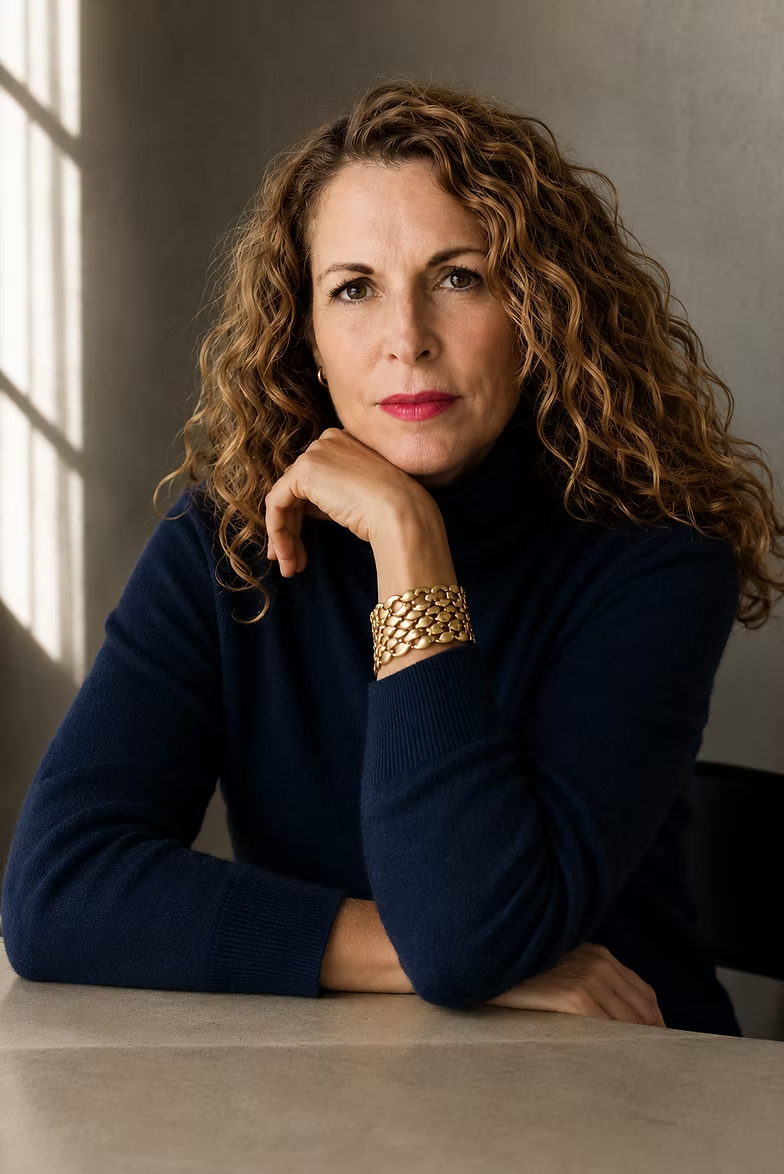
Imke Keicher joins me in the Swamp to discuss art, transformation and Artificial Intelligence. She has mastery of three disciplines: an organizational transformation consultant, one of a kind artist and an emerging thought leader in the positive use of Artificial Intelligence. What stood out for me in our conversation was her “old” soul, thoughtfulness, kindness, and focus on the common good. Imke is a polymath for good.
Imke’s Links
https://www.transformationplus.company/
Thanks for listening. Send me your feedback
I want to thank my great team that helps me sound better than I am.
- Jacki Hydock for her lending her wonderful voice to our introduction and outro
- Great music by Jazz Night
EPISODE 90
[INTRODUCTION]
[0:00:06] ANNOUNCER: You are listening to 10,000 Swamp Leaders, leadership conversations that explore adapting and thriving in a complex world, with Rick Torseth and guests.
[INTERVIEW]
[0:00:20] RT: Hi, everybody. This is Rick Torseth, and this is 10,000 Swamp Leaders. This is the podcast where we have conversations with people who have made decisions in their life and in their work to use themselves for the common good, to make the place a better world for us to live in. Today, I am pleased to have a guest that I just met about two months ago, Imke Keicher, who I’m going to give her a second here to introduce herself, because she’s got a multi-dimensional background. The reason I asked her to join us on the podcast is because she brings a mix of incredible talents between an artist, a business career and also an emerging, I’m going to say, emerging expertise and adapt in artificial intelligence is coming along rather quickly. So, you bring a lot to the conversation that matters to the people who listen here. First of all, welcome to the Swamp, it’s good to have you here.
[0:01:17] IK: Thank you so much for having me.
[0:01:19] RT: Okay, so to get people acclimated, what is it you want them to know about you before we get into the conversation?
[0:01:27] IK: I’m sitting in Switzerland and English is not my native language, not my first language. Maybe that helps if sometimes I use interesting expressions. But I love the English language, so you also might find me to use old-fashioned expressions, which is a little hobby of mine.
[0:01:46] RT: Okay, so when I was getting ready, we should tell people that you and I met just two months ago at a conference in Oxford. The theme and the focus of the conference was artificial intelligence. You were invited there by a colleague of ours, Mickey Yates. You know quite a bit about AI and among other things and had a good fortune – well, actually I had two good fortunes. I’ve met you in a pub in Oxford, which is really the only way to meet people, I think. Then we happened to be at the same table the first day while the conference unfolded, so it gave me a little more chance to understand who you are.
It came away with that, thinking you’re a bit of a polymath, if you will, which is someone who’s achieved significant levels of mastery and skill in multiple disciplines. People can’t see this right now. They’ll see it on the link here. An amazing artist. You’ve been a very high level consultant, and now you’re emerging as a thought leader in some ways in artificial intelligence. My question to start us is, how did this all evolve? What holds these all together?
[0:02:47] IK: Thank you very much for that question. That’s a question I ask myself quite a lot. One thing I can say is that I always followed my curiosity. Also, I was a quite artistic person when I was younger. I also found the world of economics and everything that was big business very exciting. That’s how I somehow almost miraculously driven by curiosity and immense joy. I found myself in consulting, which when I was younger, I had no idea it even existed. Now I’m coming back to, well, it’s almost like an urge to also use that other talent. Here I am. I find a pioneer to bring those different aspects of who I am together at a later stage in my life.
[0:03:47] RT: What I’m wondering about is most people might be attracted to two or three disciplines at a young age and choose one and figure that’s the only option they’ve got and I need to chase that for a long time, and maybe I come back to the other ones later on. How did you find a way to keep a couple of tracks alive and growing and emerging that are quite different, so that you didn’t lose contact with either of them and you can bring both of them forward at a high level at this point in your life?
[0:04:15] IK: I think it’s not something I did consciously. It’s more like, I couldn’t do other than. Also, go to galleries and even when I was a busy consultant, a very busy consultant. As you probably can imagine, I was so curious about it and also I needed to be around artists and to be around art to, I think, probably stay sane to a degree.
[0:04:43] RT: Can you say more about that? I mean, what is it that happens in the art world that can – I mean, because people may not be artists, but they go to museums and they oftentimes come out relaxed and reflective and something shifted at least momentarily for them. What’s going on in that world that provokes that kind of settling for people?
[0:05:05] IK: Well, there’s one thing that we know from urology. We know that brain activity is triggered that enforces self-reflection when we look at original art paintings. That might be something that is a biological explanation of what’s going on. But at this stage, there’s even in some of the contents in Switzerland. But if I recall that properly in France, for example, you can be described going to museums, so art can be described by a doctor. Of course, empirically, which is see that people, that art helps some people. Maybe not everyone, but a lot of people to reconnect with a raw and fundamental creativity, we often have to set aside or fear, we are not invited to use while we’re doing our so-called series day job.
[0:06:13] RT: Can I play with this a little bit with you? Because I studied art history as a minor in college. You said something early on, and this isn’t part of anything I prepared for, but you provoke it. I do have an experience when I go to museums and I tend to pick the French world impressionists, etc. But I do have this experience in my body that after spending 30 or 40 minutes there, that I show up differently, calmer, quieter. There’s something that’s happened to me and all I’m doing is looking at this art that I couldn’t possibly paint. But is that part of what you’re referring to?
[0:06:50] IK: Exactly. That’s something very intimate that’s going on between you and a painting, or another piece of art. We can measure it even in the brain. I think that there’s also something else that’s happening in the modern world, where art invites you to have a dialogue, especially modern art, is not telling you what it is. It’s not kind of, if you’ve studied art history, it’s a parent. There’s a craft to it, and you know if you see a corpse, that means this, or a butterfly in the Netherlands paintings that stands for transformation, or what have you. But the modern art world basically doesn’t give you anything. The artwork means what it means to you. That invites you to a deep inner dialogue and it also opens a different associative field through the colors.
Colors have also a physiological effect on your body. It could all effect from being calming, or exciting and all of that, so there is a lot of really physiological stuff going on in our body, which we’re probably not aware of. That happens when we are surrounded by artwork.
[0:08:20] RT: Knowing this, for you, how did you use this understanding in your time as a consultant, where the whole world is different? It’s about making numbers and successes and accomplishments and results, etc. You’re in that game. you’re playing that game a little bit yourself. But how were you able to weave in from time to time that experience of seeing the world through an artist side that may have informed how you could be more effective in your consulting life?
[0:08:48] IK: Initially, not at all. Initially, when I started in consulting, I was very busy being a proper consultant, and not even mention my passion for the arts, absolutely. Because I was afraid that making that known of myself, that the image people have for myself could be tainted, and I could be considered less serious. But then, I would say, probably after 15 years into the business and my specialty is transformations, for me it got increasingly clear that we almost needed, that we needed different methods to give people a chance to open up and also to invite them to have deeper conversations. Then for quite a period of time, I would try to integrate artistic methods using artwork, or even creating artwork, or painting, or color, or using something from the outside world, from the art world to help having deeper conversation and to help people to also get into the space of associative thinking.
Because through art and through color and even if you draw a doodle, or something like that, that opens up different areas in your brain. You might be able to access different information. It might help you to think more creatively. It’s not kind of it helps. I couldn’t guarantee it helps, but in my experience and with many other people who do this, it helps. It helps people to have more conversations about what really matters to them.
[0:10:48] RT: Let’s give people some small craft. A lot of people who listen to this are resonating with what you’re saying, because they’re consultants, or they work in organizations. What’s a small dose if they’re thinking, “I’d like to try some version of what Imke’s talking about here.” What’s a soft, small entry point to run an experiment to see how it goes and then they can go from there and determine the value of it and whether they want to expand on it? How would you coach them to enter into that small experiment?
[0:11:19] IK: Very small doses could be something like, I would ask people to draw something upside down. I give you a picture of a vase, or a drawing from Picasso and I turn it upside down. I ask people to draw it. Or I give them only a piece of a big Picasso picture, where that probably holds only one or two lines, and I ask you to replicate it. Then to give you an experience of that artists look differently at the world. It’s a way of seeing what is, rather than seeing what you know. If a child paints a chair, or not a child, but the grown-ups, we know it has four legs, and so we paint what we know. But real artists, they really look at the size and shape and curve of a line, regardless of it’s part of a vase, or not. With that little exercise, I give you an experience how powerful that observation is and how powerful and how easy it is to get in a space of not knowing and not jumping to conclusions immediately. Because that’s what we do most as more experience and senior as we get.
Especially in today’s world, we need a lot of not knowing. I know it sounds weird to many people. I open up the space for a period of time and holding it off not knowing, because that’s the crux, where the new stuff can come in. That’s I find a very sacred space, if you can allow yourself that something might emerge and you’re not jumping to, “Oh, I know exactly. It’s this, or that, or the other immediately.”
[0:13:15] RT: It’s interesting to say in the last few years I noticed and I think partially the work in the podcast has fed into this maybe, and also getting older is how difficult it is in a conversation to say, “I have a problem. Here’s the thing I’m struggling with.” It doesn’t matter what it is. And notice that everybody immediately jumps to expertise in trying to fix it. How rarely are there any diagnostic questions, or curiosity-based questions to me before they go to work to try and fix it?
I find that at this point in my life to be incredibly frustrating. Almost to the point of no patience with it anymore. Then the wonder of discovering a lone wolf, a lone person out there who asked me two or three open-ended questions that I wouldn’t have thought of and suddenly, there’s something going on. I just wonder from your perspective, what’s the ways people could help other people sort through problems from your perspective, without providing answers immediately?
[0:14:18] IK: I think it’s also it comes from your own mindset, like what you think your job is. If you think you are gratified and you’re respected by having the answers. Many people actually have made this experience in their life. So, then it’s really difficult to almost suppress a reflex of being in the know, because very frankly, at my stage, I would easily find a sentence and answer to, I think, almost everything. That’s not difficult, but that’s staying in the same space, basically. That’s not generative. That’s not where I want to go. I think in order to actually – To me there is not a trick, or a trick question. To me, there is that in an attitude, if you’re really curious and if you are curious together with the person you’re coaching, and if you don’t think like, “I already know,” I can tell him or her already what the problem is, or already.
If you’re really curious and open, because it reflects your view of the world that you don’t know, and that there might be huge possibilities and answers you are not aware of, and you can’t see right now. If you come from that inner – It’s the inner place. To come from that inner place, you don’t need a technique.
[0:15:48] RT: Yeah. Okay, so let’s move here. Because I read in the information you sent and some other places that your work and career has been driven by one question. How do humans create what does not exist?
[0:16:01] IK: Mm-hmm.
[0:16:02] RT: Okay. So, I need you to expand on that observation, of that question, and why is that a significant thing to ponder?
[0:16:11] IK: I don’t know why that is a significant thing to ponder. For me, it’s almost like the only thing to ponder. I remember, I really remember myself sitting at a kitchen table when I – I must have been pretty – I could already write. I know that. But I must be probably below 10, sitting at the kitchen table in my parents’ house and thinking almost like, I was almost frustrated that I want to know how this world works and how one can make things and do things and bring – That was like, probably I’m born with that question. I have no idea where it comes from. It was just in me.
I think that I’ve always been very curious also about different genres, or different fields of knowledge, or expertise. I could get excited about science, about quantum physics. Don’t get me started there. About basically almost everything, because I always suspect, there might be a little information here that helps me to better understand how we create, how we make things happen, how we change the world.
[0:17:33] RT: Okay, so one of your disciplines is consulting and helping, coaching. How do you in your craft of that working with people, how do you use this stuff you’re talking about with them in the world that they’re paying you, because they’re stuck on something, they need help, how do you go about this?
[0:17:54] IK: Not sure if that’s an apparent thing. I think what people would see when they work with me and what they would actually provide as a feedback is that I’m very creative in founding solutions. I think they probably encounter, rather, my inquiry into the problem at hand, and then my willingness to reinvent the wheel, or my willingness to not use a recipe that worked at a different place with a different client, but my willingness to co-create with them something that’s specifically right, and that resonates with that client over that client culture organization.
[0:18:41] RT: I’m going to speculate that the journey with that person to that place is not a straight line. That it can go in all sorts of different directions for a while before things start to emerge, or clarity starts to come, or ideas start to show up. I mean, it’s not a simple straightforward process.
[0:19:01] IK: It is straightforward in some aspects and then it’s not. I’m also using very kind of basic consulting skills, absolutely. And I make sure I know a lot about the organization. I understand who the different stakeholders are. I make sure I’ve talked to various people in the organization in order to get the different perspectives. All of that, I do what every kind of consultant would be doing. Maybe that not straightforward piece comes at that point of the solution generation, when we talk about what might we be doing and how could an architecture look like, how could a format look like, all the different products and formats I’m co-creating with my clients. It might be probably less schematic, less cookie-cutter. But other than that, I think you would also find really, a lot of methods professional consultants would use. Yeah.
[0:20:12] RT: A month ago or so when we were together in Oxford, I noticed and we talked about this on a break but just for the benefit of listeners, I don’t know who was speaking, but they were speaking about AI in some form. I noticed that you were drawing in your pad. And not just, I mean very intricate small lines, but lots of stuff going on there. I found myself getting positively mesmerized and distracted by whoever the speaker was. Probably was Mick.
[0:20:46] IK: I’m always doodling.
[0:20:47] RT: Yeah. What I’m curious about is people have – they don’t have the access to what I saw you do, except that most people would say, “Oh, she’s not paying attention. She’s busy doing something here and the person up there’s, she’s bored.” And I know that wasn’t what was happening.
[0:21:03] IK: No. It was the opposite.
[0:21:05] RT: Yeah. So, explain that dynamic, if you could.
[0:21:09] IK: One could call what I do doodling. It helps me to stay focused. I include in these doodles – I include also sentences and stuff I’m picking up, and sometimes it’s only words. It’s probably a very me specific way of actually writing a protocol of what’s going on in that session. It contains what I’ve heard, what I pick up and think is relevant, and some of the ideas I have with it. That non-verbal part, when I’m not writing those and most words, most of the time I’m not writing words, but I’m just drawing doodles.
It’s really interesting that if I look at these drawings later, they help me to bring the session back. That’s really my way of memorizing the whole session. I’m sure there’s a smart answer to it. I’ve never researched, because I’m just doing it. There might be even a neurological brain research answer to it, why that works for some people. It works for me.
[0:22:34] RT: Yeah, works for you. It produces some pretty interesting something, art of some kind.
[0:22:41] IK: I wouldn’t call it art. I would really hesitate to call it –
[0:22:45] RT: I’m going to call it art, because I couldn’t even do that.
[0:22:47] IK: That’s really kind of – It’s really kind of you.
[0:22:50] RT: Okay, you wrote a sentence in some information you said, and this is a little bit of a shift now towards artificial intelligence. You wrote, “I wonder whether we still allow ourselves to wonder.” Can you expand on that? I read that as not just a question, but a concern. If we lose the ability to wonder, the curiosity to wonder, something not useful happens to us. But that’s my inference on your question. But where’s that question come from for you?
[0:23:19] IK: What I see currently when it comes to AI and what AI is and means, I find a lot of fast, practical answers. I find a lot of how do’s and the hacks and the smart problems, and a lot of concern, of course. All of that. I think, I always am doubtful if we are too fast into closing things down into meaning making, into, oh, right now I’ve understood. Especially when it comes to AI. I have not made up my mind. It’s like, I’m still on a quest trying to understand what that really is, because there are so many different aspects to it. I really love the inner attitude of wondering, because it’s opening up. It’s opening up to plenty of possibilities. It’s paving a way to maybe finding something that we even didn’t know existed before.
I’m reactive when there is too much of that closing spirit in the conversation. Closing means, now we know it’s dangerous, or it’s not dangerous. It kills job, or it doesn’t kill – and all of that is true at the same time. To wonder, I find, is a very, very precious inner attitude to keep us also in our agency. If I’m not closed on, it’s good or bad. Also, wonder is not how can I use it to make money, or that utilitarian that’s going on, like hit my world. I find that utilitarian spirit, I find that limiting. If I look at the world at the state of the world right now, I feel we can do with a lot of new ideas and new approaches. I’m always happy if I – and wonder is that inner attitude of I can stay creative, constructive, and if I can still feel my agency in all of that.
[0:25:59] RT: So, how do I – She’s laughing at me as I’m asking this question.
[0:26:02] IK: Yes. Because, you know, I’m thinking, no, don’t ask me how do I wonder more. Please, don’t.
[0:26:09] RT: That’s what I started, but I shouldn’t ask that question.
[0:26:12] IK: I don’t know. Please don’t ask me that.
[0:26:14] RT: Yeah. But you provoked it when I read this in your writing and it made me reflect a little bit about what is my relationship to wonder. I would say, it’s pretty poor. AI isn’t necessarily the first to take a shot at me in my wonder capacity. It was on the way before AI showed up. The pace of life, the cultural requirements, etc., my willingness to say yes or no. Well, you did provoke in me the idea that wonder has value. To see that just to start. For Rick, what does it look like to be wondering? The first thing it comes up for me is just, “Oh, man. I can’t spend much time wondering. I got maybe two minutes to wonder. Then I got to get on with it.”
[0:27:00] IK: Oh, gosh.
[0:27:01] RT: I’m thinking, that’s not useful. That’s not wonder.
[0:27:05] IK: That might not be wondering long enough with your thought.
[0:27:09] RT: Yeah. I guess, I’m not asking you to answer the question, but I don’t think I’m alone here in moving at a pace where wonder is getting sacrificed, or just not even acknowledged, and things are coming around that could have been more useful, or better designed, or healthy, or such if there was more wonder. That’s just my reflection on your provocation around wonder. I know you don’t need to answer it, but I just know you messed me up in a good, useful way here with that comment.
[0:27:39] IK: Yeah, and you made my case, basically. So, thank you for doing that. I’m aware, if I write things like, “I wonder if we shouldn’t wonder more,” I know that this is a huge provocation. But if you think about it, how did we get to a point that this is a provocation? Because look at like, when you started your life as a child, when you were still really creative and full of energy, I suppose, and many of us were, and wondering all the time. That was not an unpleasant moment in your life, I suppose.
[0:28:19] RT: No. I think we may end up circling back here, but there’s another point you make that fits in here. You say, “At this point so far, AI is not simplifying our life, or our use of time. It seems to be speeding us up and intensifying our life and our work.” To me when I read that it sounds like trouble is brewing for human beings here, because we were moving pretty quick before AI. Now it’s faster. You got a foot in both worlds here. You’re using AI and you’re trying to understand it and you see value in it, and you’re also writing cautionary signs about it. Where are you right now with AI relative to humankind? I know it’s a big question, but you’ve done a lot of work on it. Your answer is as valid as anybody’s.
[0:29:06] IK: Yeah. I’m not more scared about AI than I am about human kind in itself. Because AI is as destructive and as beneficial as we are as a mankind, because we created it. That’s a philosophical answer, which I could easily kind of, you cannot go out and find also less philosophical examples of it. But it’s created by us, so it’s not better, or worse than us. If you want to understand what we are capable of, look at the state of the world. That’s scary enough. But also, there is really wonderful – humanity can be also absolutely a wonderful and loving and AI is actually something we have not seen before. It’s not only a tool. I insist on that. It’s much more than a tool. But it’s a product of our imagination, ingenuity that has the traits of who we are in it. We have to deal with ourselves. AI is giving us the ultimate challenge of understanding who we are and also making some decisions of how we really want to be as humankind.
[0:30:38] RT: Take your own advice here. What is it you’re doing to take care of yourself and to take care of AI as in an adult way, a mature way, a way that is slightly different than the going approach that most people are taking with it right now? How are you actually on a daily basis dealing with AI in your life?
[0:31:01] IK: Well, for example, I use it for writing, because English is not my first language. I would always start first. I would always write my thoughts first. I’m never asking AI to do the thinking for me. Never. I really insist in doing the thinking myself. But I, for example, I use AI to help me cleaning up an article, or an essay, and maybe also helping me to make sure I’m – sometimes it’s really easy to miss an expression, or a phrase, and it’s easy to do a lot of mistakes. That’s how I use AI. I a lot also for turning paintings I’ve created into a image idea. It’s like, I still paint as before AI. It’s the same process. Hasn’t changed at all. But I use the products of my paintings. I use my paintings in AI to create new images. Because I might have an idea for a picture, but not the time to do the whole picture.
I give AI, like this is an image. Use this. Also, with all the creatures that are on that image, but here is the new scene, and here’s the new scene. For example, I did one thing to make that less cryptic. I was once writing about our religious relationship, or admiration to data, so I had the idea to – I wanted a picture that shows data on the screen, and then creatures worshiping in front of the data. So wonderful, because I’ve painted so many creatures, and AI has done a fantastic job in probably 30 seconds. This picture would have – which is very much me. Like, if you know my pictures, this is a me picture. But it would have taken me days to do it. And so, it would have never existed. Interestingly enough with AI, I create stuff that I would not have had the time to create previously.
[0:33:18] RT: When you and I are exchanging in preparation for this, you sent me a document. You said, “I asked AI.”
[0:33:24] IK: Yeah, yeah. Yeah.
[0:33:25] RT: So, tell people what you did, this little experiment. Because I think this is part of what you’re talking about.
[0:33:30] IK: You asked me to send me a bit more stuff about you and I was thinking like, “Oh, gosh.” Okay, for all the links and all everyone might understand how that is a piece of work that is tiresome. Then I thought, no, we are in the age of AI. I’m working a lot with Claude. I really asked Claude. I said, “Claude, I’m having a podcast and I want you to do a briefing for the podcast host based on your experience with really as a co-worker and also do the research,” so research what is in the net about her and also my – that kind of mundane, my curriculum vitae and all of that. “But also, tell him whatever you think might be interesting for him.”
I had a day, of course. I thought it was really funny what AI come back with, like how I operate. Most of it was pretty accurate. I thought it’s a fun way also for you and for us to experiment with being in that new world and integrating AI into how we do work.
[0:34:46] RT: I have to say for listeners, you’d have to read the document. But it was also had a tone to the writing style by AI. Very clear that you are the senior partner in this venture, so to speak, and it was there to support you like a dutiful co-worker, or something like that. There was a lot of very pragmatic, useful stuff in there. It struck me that it would have been more painful and taken a lot longer for you to generate that and send it across to me than what AI did.
All right, so we’ve left unattended and for listeners, you’re listening on an audio version, but I can see him, because room that she’s in. Imke, we’ll put a link to your website with your art in the show notes, so people can go there. And I’m really going to encourage you to go to the link on Imke’s art. This is a whole other world in some ways and probably not in some ways, but you are a masterful artist, and of incredibly imaginative artists. Can you tell people, what does art give you back for what you’re producing and giving to the world?
[0:35:49] IK: Art keeps me grounded. That’s also why I started painting again a couple of years ago, because I had to. It was not like, I was thinking I should be doing it. I really had to do it. That’s always a very nice spot to be when you have to do something. Also, that tells you that you probably should be doing it, because there is such an inner urge, and that was at that point, I could not hold it back. I held it back many years throughout my career, but then it was like a dam broken.
I realized while I was doing it, I realized how much it helped me to also think through the issues I have while I do consulting work. For me, it’s so joyful. Also, I’m very much attracted to color. It’s almost like, in different phases of my life, I need different colors. So, I had a neon phase, which I’m going out of currently. But I really needed at that couple of years ago, I really needed that neon yellow and neon pink in my life. Also, surrounding me I had all these pictures. Now I think, “Oh, my God. This is a lot of energy.” I could do it with less now. But it’s also a mirror to me.
Through painting, I much better understand who I am and who I am at that specific moment in time and what I need at that specific moment in time, and what I think in that. It’s a much more focus and more aware of what I’m thinking while I’m painting. I’m going into that different phase, into that flow, and that’s opening up, basically, new horizons for me, not only on the canvas, but also internally. Internally, it frees my thinking. Also, the way I approach AI now and also how I dare asking weird questions like, is data the new superstition, or haven’t we stopped to wonder, or should we wonder more? All these questions, painting helps me to really connect to my inner voice and to what I’m really thinking.
There might be something we have not talked about, but at least what I experience in my life, and I see a lot. When you are in the world of business doing work, you’re also in a very limiting mental space. Organizations tell you what to think and how to think, also in when they talk about strategy, that’s all organizations are strong creators of inner pictures. If you’re long enough in an organization, it gets increasingly difficult to really distinguish between what is my organization thinking, versus actually, what’s the deep ground of what I am thinking, what wants to surface from me? Painting helps me to access my own inner universe. You have to say something, because I saw Rick’s face and he was like, “Hmm, hmm, hmm. Hmm, hmm.”
[0:39:36] RT: What I’m thinking is based on how you described it, the world is better because you are now more fully you, because your painting is giving you an expression that you could never get in your work. We need at least both of you, both parts of you. I don’t want to overplay this, but it also has a therapeutic aspect to it. I wonder, is there loose counsel that you would put to the rest of us to chase that thing that you can’t explain, that wants to come out a little bit, cultivate? Lack of a better term, the artist in me so to speak, but I don’t want to be too simplistic with that.
[0:40:19] IK: Well, Beuys said, “Everyone is an artist.” I can easily think he was right, but maybe for other reasons than I think. But I would not go so far to recommend anything to anyone, because I think go for what your inner urge is, if it’s mountain climbing, or whatever it is. But if you can find that space where you find that inner joy and fulfillment and urge to do it, that’s always a perfect space.
[0:40:48] RT: People will see your work if they look the link in the show notes and the podcast. But would you give people a brief description of your style of painting? Because I find it remarkable. You have it now hanging in some pretty illustrious places as well, so it’s not like it’s something in your kitchen. It’s out in the world. But how do you give voice to what it is that you paint? Good luck.
[0:41:17] IK: My agents tells me, “Shut up. Artists should never, never talk.” I think she might have a point.
[0:41:23] RT: She might have a point.
[0:41:24] IK: Yeah, she might have a point. I’m happy if you want to talk about it and make sense. I think I should for once, Misha Illa, I’m obeying your advice here officially. Yeah, on tape.
[0:41:39] RT: Then what I’m going to tell listeners is go to the website, look at the paintings and they’re remarkable, and enough said. Okay, so we’re coming down, but you have a word and I cannot pronounce it. You know the word, right?
[0:41:55] IK: Geshtaltungskraft.
[0:41:57] RT: Yes. Okay. So, could you say it a little slower?
[0:42:00] IK: Geshtaltungskraft.
[0:42:03] RT: Okay, so why is that your central word? Your words, not mine here. You said centering.
[0:42:10] IK: No, it’s a German – I share it with so many billions of dead and still alive Germans. I haven’t invented it. It’s a word that speaks to me, because it encompasses that innate power. No one can take away from us, that we have to create our world, to create our environment. There is the English word, agency, but I find more from what I sense, agency is not big enough. I think Geshtaltungskraft is more all-encompassing, and it’s this innate – it’s like also an urge to powerfully go into the world and make it yours.
[0:43:01] RT: There you go, folks. I appreciate you illuminating it for us. You also said, “Being alive is the difference. Being alive is the difference.” Can you say more about that?
[0:43:12] IK: The context is AI. There is a lot of conversation going on apparently, like, “Oh, my God. Since AI is so smart and clever and can speak like us and think faster and all of the stuff AI, and actually robots will be able to do down the line in three to five years, we’ll see them everywhere. So, what is it that we still have and hold? The initial way and I’ve seen that a lot in big studies is like, okay, but humans are empathetic. Empathic, not empathetic. Empathic. They have empathy. And creativity, we’re not sure anymore, because AI is also very creative. That field of human superiority is getting so small, if you go into the branches, or the aspects that you usually look at and pride ourselves of having, or being.
Now, wonder, for example, would never come up in a list in a study. Mackenzie would never do research on wonder. But for example, closing the loop, AI can’t wonder. Wonder is very deeply connected to being alive. Being alive we share with plants and animals, with the whole planet. There is a huge driving force in the world, driving force for us that is being alive, that AI will never be able to simulate, or replicate. That’s why I think, let’s focus on what that aliveness is in ourselves, and also allow and cherish the aliveness of the other, the more than humans, the other beings on the planet, because that’s fundamentally what I think what distinguishes us, especially as we look into the future with AI that distinguishes us from AI.
[0:45:27] RT: Okay. So, what’s ahead for you?
[0:45:30] IK: Wonder. I wonder what’s ahead for me.
[0:45:41] RT: Okay. Okay. Well said. Last question. What have I not asked you that you want to get in this conversation before we bring it to an end?
[0:45:51] IK: I deliberately did not expect you to ask me any questions. I was curious to follow your guidance through the questions. Was also a journey of discovery for myself. Often, I’m extrovert. Often, I learn something by listening to myself, so thank you all so very much. I also might be surprised about some answers I’ve given. So, no. I think for now, that has been a lovely exploration journey together.
[0:46:29] RT: Well, thank you so much for coming on the podcast. I really appreciate it, and we will get this out to people and they’ll have your information where they can find you in the varying places. Thank you for making the world a little better place for us.
[0:46:43] IK: Thank you so much for having me. Would be lovely to connect with people who also wonder and have diverting thoughts on the world. That would be lovely.
[0:46:55] RT: Okay. Thank you.
[END OF INTERVIEW]
[0:46:59] ANNOUNCER: Thank you for listening to 10,000 Swamp Leaders with Rick Torseth. Please, take this moment and hit subscribe to follow more leadership swamp conversations.
[END]