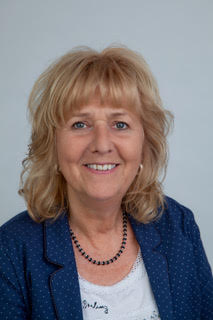
Josette de Goede comes to the swamp to discuss her 40 years of leadership coaching and consulting experience. She brings a vibrant source of energy, education and wisdom to helping leaders develop more human effectiveness inside their organizations. We discuss her work helping leaders know themselves better by understanding their human “force fields”. She has a forthcoming book that addresses Professional Mastery, Human Capacity and Moral Mastery. We explore these elements and how to use them in ways that support the work of leading. Josette offers leadership resources for each of us.
Josette’s Links
EPISODE 86
[0:00:05] ANNOUNCER: You are listening to 10,000 Swamp Leaders, leadership conversations that explore adapting and thriving in a complex world with Rick Torseth and guests.
[0:00:20] RT: Hi, everybody. This is Rick Torseth, and welcome to 10,000 Swamp Leaders. This is a podcast where we have conversations with individuals who have made some choices and decisions in their professional and in their personal life about how they want to use themselves to lead and to serve the common good and make this world a little more useful place for all of us to live. And today I have a guest who I have known for 20 years. Can you believe it, Josette?
[0:00:48] JdG: Yes.
[0:00:49] RT: My guest is Josette de Goede. And I’m going to have her refine the Dutch pronunciation because I probably haven’t done quite good enough justice to it. But Josette has been a leadership consultant for a long, long time and has traversed a lot of different methods and methodologies and ideas. And she’s formulated some points of view that are unique for her based on her experience. And I want to give her an opportunity to share that with the world. And so I’ve invited her on the podcast. Josette, welcome to the swamp. It’s great to have you.
[0:01:18] JdG: Thank you, Rick. I’m pleased to be here.
[0:01:20] RT: Okay. So, let’s give people a little bit of orientation here. What do you want them to know about you at the outset that will help them be oriented to what we’re talking about a little bit?
[0:01:32] JdG: Now, first of all, I’m Dutch. I’m from the European continent. I grew up in a modest family where higher education was not self-evident. So, I have to find my way. So, you and I met each other in Oxford, but that was a long way to arrive there. But it brought also a lot, because finding your way also make you stronger. And I’m deeply courier. I’m still following a lot of courses. I really like it and I think you become a better professional.
And secondly, in my childhood, my brother became severely disabled and my mother developed multiple sclerosis. And those experience taught me early that life is vulnerable and that talent and opportunity are not only gifts. I felt that strongly. But they come also with responsibility. When you’re healthy, you have capabilities, talents. You need to do something with it. Sound a little bit severe, but I think that’s great when you have talents and you can use them.
[0:02:37] RT: Okay. So you introduced a question I was going to ask a little later but let’s just go with it now. From your perspective, what are your talents and gifts that you have that you’ve decided back to bring forward and use in the forms of work that you do?
[0:02:37] JdG: Oh, that’s an interesting question. From nature, I have an optimistic character, and that helps in the hard work. You work with adaptive change or you support people when they are in the eye of the hurricane and they need to deal with tensions that are tough for them. Then it helps to bring in a certain lightness. And I don’t mean that it is not serious, but it is very serious but it is also relative. So let’s find out together. Because in adaptive change, you have to find out together what is working and what is not working. And not everything is personal. Make it personal because you have a responsibility. But don’t make it personal that you suffer under it. Make it a very interesting journey and help your organization of the people you work with further.
[0:03:42] RT: Okay. There’s a question. I think I’ve always had it since I met you, but I’ve never asked you about it. And I’m just thinking back to that very first morning of this program that we did through Oxford [inaudible 0:03:56]. And we began in Oxford. And we were sitting at tables of six. We didn’t know each other. We barely met. And you and I ended up randomly at the same table right on the very first day of this year-long program.
And what you just said about an optimistic attitude really rings for me because I remember thinking, “What makes this woman so bright and cheery and optimistic in a space where everybody doesn’t know each other, and she’s just a bright light here?”
[0:04:29] JdG: Oh wow.
[0:04:29] RT: And so I’m just affirming that that’s the primary way I think about you. You always show up with a smile on your face, effort to work, an effort to help people in the room, in the community, etc. And so I buy completely the gifts and talents you’re describing because I’ve experienced them for a long, long time. I didn’t have that as our starting point, but I’m glad we set it in place here.
The other thing that I know about you or always felt too is you have a kind of sense of mission and purpose. And in our leadup to this podcast, you shared some stuff on that. Would you share with people what you consider to be your mission and purpose in your work?
[0:05:09] JdG: Yeah. My mission, and that’s already for a long time, talents brings responsibility. Noblesse oblige, as we say. My mission is to help leaders to become capable of carrying responsibility in the age of complexity because that is not easy, also not for me. But how can you carry the responsibility when you also don’t know what the road will be? My mission is to support leaders and leaders in a role or leaders who exercise leadership. And my passion is that to bring in wisdom a human mastery, because I think we are now in a new era with a lot of tensions. And I think that we need to master new kind of capabilities within leadership. I’m still very driven to support and to add value to a better future. There’s a lot to say, Rick. I’m sorry.
[0:06:13] RT: That’s really a good place for us to keep going on. So, let’s talk first a little bit about this responsibility, this need that you’re describing that leaders must bear. Because you’re talking about weight and you’re talking about all sorts of dynamics that fall to a person who’s in that position. And a little later on, we’ll sharpen this distinction between leading and authority too because we don’t want to mix those two. You and I know that both. But how do you introduce this concept of this weight and responsibility? And what’s the structure and process you use for people who’ve never given it thought but start to resonate with the concept but don’t know how to do it? How do you help them build that capacity to carry that?
[0:06:58] JdG: Now, for example, I run workshops or I do executive coaching, and we always start with their challenges, their context in which they work. What are their challenges? What are their approaches? But when they are hesitating too much of talking too much and don’t act, then I also bring in my ideas of when you have the gifts, use them. Or stop in this role. That’s also fine. But don’t continue in this role if you don’t want to take this serious.
Because when you are gifted and when your IQ is above 100 or when you have a good support system, bring that to others, make this world a bit better. And I know a lot of leaders who can stick a lot to their own worries, and I support them to find new perspectives, see it in a different way. Use the intersection between business, challenges and personal drives. I do it also light but also a little bit forceful. It’s a combination.
[0:08:09] RT: It’s my view. I can’t say I authored this view. But I do think, because you and I live and work in the same kind of conditions, that for people who are choosing to lead, being self-aware is oftentimes more important than being smart.
[0:08:25] JdG: Absolutely.
[0:08:26] RT: So, I’m guessing you’ve encountered individuals who have great intentions to want to be effective at leading, and yet you may experience something that tells you their level of self-awareness doesn’t match the demands of the role that they’re in right now. If that’s the case, how do you go about – it’s one thing to build competencies, skills, and talents, how to run a meeting, etc. Helping people develop more self-awareness is a little more challenging. How do you go about that work when you get a sense that somebody just doesn’t know themselves well enough in order to be able to handle this, but they look like they’re a learner and let’s travel this road a little bit?
[0:09:10] JdG: Yeah. I think it is a process. So, you cannot be too forceful. Mirror what you see. Mirror what you think. And let them discover their strength and their shadow sides. In a series of guiding, invite people to practice it. And when they come back in the next session, we talk about it what’s helping and not. But sometimes I’m also rather explicit that I say this is not always nice to reflect on what you can and what you cannot do. Sometimes it can even be painful. But when you do it in the right way, it will bring you a lot of new strengths and new insights and then it flourishes. So you need it. It is a kind of process. But like I said, I try to do it in an mixed way of serious lightness. So I will not hurt people but I will mirror them and take them. But they are in the lead, of course. I cannot force it.
[0:10:15] RT: As you sit here now with all this experience, you must have a point of view about what are the human capacities that people need to lead well. Not the technical capacities, the human capacities.
[0:10:30] JdG: My opinion is changing also during the road. Self-awareness and knowing your strength and your weaknesses was always important. Also know your upbringing and your desires, your hungers, what you really need. But I would say nowadays there are new challenges coming in. You also need to be, if possible, an eye in the hurricane dealing with courage or showing courage, offering help. Be aware of your own shame. Now a lot of those words, it is mastering the human capabilities in a deeper way.
[0:11:14] RT: Say more about that, please. What’s the work of that?
[0:11:18] JdG: I have to find out myself as well. But for example, when you are in a management team and you are very aware of the fact that everything you say speaks also to the board or to your bosses. And when you’re holding yourself in, you don’t speak freely, you speak with something in your mouth, then the decisions in those management team sessions are not optimal. And it can also be with shame. When you think, “Oh, I should not say something about these figures. I have losses.” I explain it now, let’s say, very easy. But when you have losses and you are not explicit about it, then you cannot deal with your colleagues about the decisions you need to make together. All those decisions are suboptimal. And I think in this era when there is a lot more complexity, there is a lot more unexpected changes going on, and then suddenly the whole geopolitics change. What does that mean for also businesses, or for ministries, or whatever? You really need to be aware.
I think maybe you should be in a kind of helicopter. You need to sit on the table and you need to be on the helicopter at the same time and say, “What are we doing? What is coming in?” Are we aware of what is going on and what that demands from us? And sometimes it demands courage. Sometimes it demands openness about your own not knowing or offering help to your subordinates. I think you really need to be very aware of how you act, and how you act together, and how you make decisions together.
[0:13:07] RT: So, you’ve used a couple words here I want to go back to and have you amplify and also perhaps orient ourselves for the listeners here and for you that, as we’re talking about this, I’m thinking we definitely want to talk about in a little bit but not right now. Therefore, what’s the design of a practice that people can use just like they’re trying to learn how to ski and they don’t know how to ski? They have to have a coach or they have to have practice. They have to do repetitions. They’re going to make mistakes, etc. I want to seed your thoughts about what’s the design of a practice for building some of these things including – you mentioned the word loss twice.
[0:13:46] JdG: Yes.
[0:13:46] RT: For people listening, I think I have an understanding of what you’re meaning when you say loss but they might have a different one. Let’s get that sharp here. When you’re talking to clients about loss or even shame, what is it that you’re seeking to help them see in themselves? And what is that process like?
[0:14:07] JdG: There is a lot of processes going on under the surface. Maybe not that people are aware of it. For example, in change, we speak a lot about resistance. And we also know that people are more willing to change if they have a say in it. But what I try to explain to people that there is an underlying fear for losses. That can be loss of reputation, loss of your colleagues, loss of your freedom in how do you do your work. And that is not always explicit. And those losses are not real losses, but people are afraid that that might be losses they will face. Those losses can be a very strong force not acting according the new appointments or the agreements they have made to each other.
When you talk about change processes or leadership development, it is very good to talk about approaches and what can you do, what is your desire, what do you want to create, why. The most important word is why. But then also, let’s face what you’re afraid of let’s face what the shadow side of this might be. That is what I considered as losses.
[0:15:29] RT: Okay. And this is my experience, because I am with you lock step here, that those losses that they’re maybe being troubled by in their role have a history in their life that occurred earlier.
[0:15:45] JdG: Yes.
[0:15:46] RT: And this is just another version of it because they haven’t dealt with it.
[0:15:49] JdG: Yes, for example, that can be.
[0:15:51] RT: In that context, when it’s back there rather than just right here, how do you support them in actually maybe for the first time or finally willing to explore that one so they can let it go?
[0:16:06] JdG: Yeah, of course you need to create a safe environment. I always call it mastery sessions, because most of the leaders I met they are not just starting, they are experienced. So we go a phase deeper. And it’s also not a therapy session. It can go deep. But the purpose is not per say therapy. We see what’s necessary to discuss it. And I also ask and agree with them if we go to – how do you say it? I use too much speed, or I bring them to a field they don’t want to be, then they are in the lead of course. But I will challenge them. And I also give back my few.
And what I also do with mastery sessions, I bring often five, six leaders together. Because they are so experienced because they see it easier with other persons than by themselves. Groups of 5, 6, even a 10 people. And then talk about mastery. Why mastery? Because they are experienced. Can we bring it to another level? Can you master it in a different way? And what are you willing to explore? You ask for a process. That can be a process. Because the one-to-one sessions are okay, but let’s speed up a bit because the world is sometimes in fire.
[0:17:34] RT: And what you’re saying is a small group can go faster than an individual can go. Because I can learn from you and you can learn from the person across the room and access to something. And next thing you know, we got a little more pace.
[0:17:45] JdG: Yes. And I only have one brain and one life of experience. When you bring in five, six, seven, then it is more rich.
[0:17:54] RT: All right. In our exchange back and forth, you used a phrase that I liked. You say leadership comes from obligations. And you have some point of view about what some of those obligations are. And I want to start with moral authority because you explicitly write to that. And I think for some people, the word moral can be a little scary word for them, but I think you have a slightly different way of oriented. So what do you mean when you say part of the role of leading well is managing moral authority? What are you talking about there?
[0:18:27] JdG: Yeah, it is a different phrase. Yeah, not the phrase itself of course, but the concept is difficult. I have been trained in a Sufism. And there is a very famous sentence of Rumi, the poet from 14th century. And he said there is a field between right and wrong, and I meet you there. I love that because what is right and what is wrong. But are you willing to explore it? It is too easy to say that’s not good, so don’t do it.
For example, now in current day, should you fly or not in relation to the climate change? That’s not that easy. But are you willing also in leadership roles to explore with others what the pros and cons are? That’s more a practical example, but also the pros and cons of your decision. Are you taking in account what your decision means for the people who are involved in that change? And how can you involve them more actively that they become part of it? Because I really think that each decision you make, you have to look in the mirror and be aware of what you’re doing and what your own pitfalls are. I recall that from my own leadership role.
[0:19:44] RT: Yeah. What’s my contribution to the mess that I might be trying to solve here?
[0:19:49] JdG: Yes, that’s it. Beautiful. Yeah. Because you do that.
[0:19:52] RT: All right. We’ll do a little advanced promo here. You’re working on a book.
[0:19:58] JdG: Yeah.
[0:19:59] RT: Which is no easy task in itself. And you, in our exchange, the book has I believe three different elements that you’re taking on in your writing. Professional mastery, human complexity, and moral mastery. For people, since you’re framing it in a kind of context, say a little bit about each of these. Why did these three elements for you become the basis for a book? And say what you want to say about the book itself and why you’re writing it. And then let’s take these three elements and give you a chance to illuminate on each of them.
[0:20:32] JdG: I work a lot with leaders in the last 20 years, a lot about what they are trying to establish. And what I notice is that often they are more than willing and they think about it. But it’s a lack of knowledge about organizational change or organizational processes. Or I see that there is a lot of, let’s say, business school knowledge, finance, etc., etc. But how do you create a good organizations with streaming processes? That’s one thing. That is the professional mastery.
Also, are you aware of what you are doing or why you are doing it? People often are like a pamphlet. But people could be more precise in what they want to create. And they are often part of a multinational or there is a strategy, and there is a lot. But what do they want to create and why? Why is it important for the people around them, for the business, for the clients?
I really like to give them some ideas about the professional mastery in this phase of their professional life. And it is not per se for leaders, not per se for consultants. It’s for those people who think they are exercising leadership.
Then we have the moral mastery. And you already asked about that. But I think I really like to invite people also to think about what am I doing, why am I doing it. And do I think it is right, or is it wrong? Because in this time, in this era, we really need to bring back morality, the human skills. And I go for that. That’s my mission. I would extend a lot. But the moral aspect of leadership is also very important.
And then building up human capabilities with a deeper level, like we said about courage. But also, can you deal with silence? Can you deal with loneliness? Can you hold the horses when you really feel the urge to do something, but it is better not to do? Act, wait, wait, wait. And can you also be an eye in the hurricane of all those tensions? And you can develop those. I call that three fields of mastery. But they are of course interrelated. And how you develop that, yeah, that’s another question. But I think I really feel the urge that we need to work on this explicitly. Because on this earth, there are so many who work explicitly on the other side. So let’s go for a counter force.
[0:23:20] RT: Okay. The listener is going to want me to ask this question based on what you just said. When you said – and then building is another question. They’re going to say, “Okay, ask her that question.” We won’t hold you to it now because the book’s in process. You’re still working on it.
[0:23:36] JdG: Yes.
[0:23:37] RT: But how as a listener – and let’s take each one of them. Let’s start with professional mastery. You’ve been doing this for a long time, so you got a point of view that’s valid. What are a couple one or two things a person could begin doing tomorrow in their role in leading around professional that addresses professional mastery? And we’ll just do that for each one of these. Just a couple tidbits.
[0:23:59] JdG: I would say sit down a nice afternoon, on Sunday afternoon, or in your workplace. Take a good cup of tea or a glass of wine, and think about what do you as a leader want to create the coming year. And of course, you keep in mind what is wise for business or when you are in the public sector for the outcomes. But what do you really want to create and why? What should it bring to many stakeholders? Not only the people you work with or your bosses, but also your clients. Layer it. We call it a [inaudible 0:24:37] model. Layer it. What should that bring? And I really believe that you will have more courage or you are more driven when you know what you want to do and why you want to do it. That is a sparkle in your soul. It is energy.
[0:24:56] RT: Human capacity. Let’s take human capacity now.
[0:24:59] JdG: Yeah. Now, for example, how do you deal with your irritations? Take one of those tensions you feel that they are in the way of your full blossoming. You know that because your wife is saying that or your husband. It goes back in each year, in your year conversation or whatever. You know that you have a pitfall or maybe more. And take that serious. And talk with people about, “Hey, what do you see me doing? And what would help if I do it in another way?” Try to do it in another way. But put light on your shadow side, I would say. And make it to a goal or a purpose of change. And of course, it will stay with you. We have our strength and we have our pitfalls. But you can minimize those pitfalls. Are you more aware of them? And when you are working, and there is a dialogue going on or maybe a debate, and when you know your own pitfalls you can steer them, you can master them. That’s important.
[0:26:05] RT: Okay.
[0:26:06] JdG: Step further in self-awareness.
[0:26:09] RT: Okay. People are going to want to know the answer to this question. When’s the book come out?
[0:26:15] JdG: I hope next year, Rick.
[0:26:17] RT: Okay. For all those listening, when Josette’s book comes out, I’ll let you know and where you can find it.
[0:26:25] JdG: Thank you.
[0:26:25] RT: We’ll be waiting. All right. So, you’re a treasure trove of concepts actually, I think, that are useful in leadership development. And this was new for me when you introduced in our exchange this notion of force fields. So, would you explain what you’re talking about with force fields? And then you’ve got some specific elements that are distinguished in force fields. What do you mean by force fields in a context of leadership right now?
[0:26:52] JdG: You are in dynamic fields. And a lot of forces are playing a role. And some of those forces are within you. For example, you have fear and you have desires at the same time, but also between people. You can also call them polarities. But you are in a field where it’s a lot of dynamics going on. And it is maybe a Dutch word. But let’s say a lot of waves together. And those forces work with each other or against each other. And that can make you insecure, or it can bring you to a a certain point that you think, “Oh my god. How did I come here?” How can I influence that?
And I think I already mentioned those. But for example, aggression, dealing with aggression, or dealing with risk. And also, your desire to create something. And how is that working within you? Are you holding your horses because you’re afraid? Or are you holding your horses because it is wise as an approach to wait a couple of weeks? That’s different. And are you aware of your motives? Those four fields are working within and between people.
[0:28:19] RT: Let’s tell people too that it’s not just conceptual for you. You have very specific – and we don’t necessarily need to get into all of these. We can do some stuff in the show notes and stuff that we can post for people to follow up with you on. But I’m just going to run down the list, but maybe we talk – just give them a tease about talk about some specifics of some of these words. But you’ve got courage, shame, loss, hope, aggression, silence, longing, loneliness. And I think I’m turning over here. Consolation, integrity, and surrender. And there’s probably more, right?
[0:28:53] JdG: I think so.
[0:28:54] RT: Just to illuminate beyond concept, so maybe people get a little grip with something here. What shame? Let’s take shame. Because every one of us has had an experience of shame somewhere in our life. When that becomes a “force field”, my story that I made up when I read this coming from you is I’ve probably created a strategy that I’m not too aware of to avoid shame at all costs because I’ve already been there. I don’t need any more of that.
In that context, when you’re doing coaching or helping groups of people in leadership, how do you introduce this concept of force fields and all these different versions of it and work with it so people can actually make some progress so it doesn’t continue to plague them?
[0:29:41] JdG: And like you said, against all cost. And sometimes the cost are too high. For example, when we are in such a mastery group, we talk about a plan that somebody has but doesn’t bring in to his colleagues is hesitating or – then we dive deeper and deeper. And sometimes I say not only where you’re afraid of, but then I turn it and say is this something that you are feeling ashamed of? It is a concept that I bring in. Because I have noticed also with myself that you can wait bringing in your opinion because of shame. And those shame can be not grounded in reality anymore. And we don’t have to dive into the history. And like I said, it is not per se a therapy session. We don’t avoid it but it is not per say. But we can talk about, “Okay. What is shameful for you?” And do you recognize that it is coming back in these sessions with your management team?
I can give you an example. There has been a time, and sometimes it is still there, that I feel ashamed that I come from a common background. It is silly of course. Why should I be ashamed? But still, when I’m with business leaders or whatever, then the girl in me needs to replace herself with the growing up because the girl thinks, “Oh, I’m I’m not familiar with how the play is going on. What I should do?” Or they think I’m not capable. Or they think – you know all those things.
When you know yourself and also what you’re afraid of, but also more literally the shame, because shame is a very strong emotion. I try to put more light on those strong emotions and discuss them with people. And maybe we have done that in the past as well when we worked on self-awareness. But what I try to do is go a layer deeper and also a little bit faster because you may expect from business leaders that they are capable of some force.
[0:31:58] RT: Right. Take your own example you. This is quite interesting. You have this experience of your upbringing in the world you lived in as being something less than. And so when you’re having that experience, when Josette’s having that moment and you know this distinction you’re talking about now from distance, what do you actually do in that moment that gets you some shifting and getting you to who you are in present day? And what’s the move you make? Because people are wondering, “What does she do when that happens?”
[0:32:33] JdG: No, I’m more aware of it. I’m more familiar with it. It is an ongoing processes. So, you asked me a couple of minutes ago, what can I say about those three fields? And I said, for example, take one of them and make it to a goal, to a purpose. And I know that shame plays a role in my life and in my work with other people in the relationships. I think about it.
And when I have conversations, I reflect afterwards if I was strong, if I was open, if I have said what I wanted to say. Reflection is very important. But also, in the conversation, I have learned now that halfway I think, “Okay, where am I now in the field of shame? Did I say what I wanted to say? Do I hold myself small?” It is a kind of self-management. It is mastering yourself. And I think when people like us who are more experienced but also leaders who are, let’s say, around 35, 40, 45, they can work on this mastering and steer it in the moment and not only afterwards. Sorry.
[0:33:48] RT: I think what I hear you say is you’ve worked on this a long time. So the speed of the response between you realizing I’m back in my shame world and getting back into my power world is a lot quicker now than it was because you kept working on it for a long time.
[0:34:03] JdG: Yes. But it is like training for a sport. Okay. Yes. It takes time. And there are also other influences, like the weather or whatever. But you can speed it up. When you focus on something, you can speed it up. It is like a muscle, the shame muscle and the courage muscle.
[0:34:23] RT: And it’s real too because it affects your life. It’s not a pretend thing. It’s a real thing.
[0:34:28] JdG: Yeah. And I have the responsibility to bring it in because it can play a role in decision making in the teams I work with.
[0:34:37] RT: All right. So let’s shift a little bit. Because in more recent times – well, for people who listen to this podcast know that there has been a constant or continuous element that’s shown grown up from time to time since the time I began, which is conversations with people who have some direct experience with the work at Harvard of adaptive leadership.
And I wrote my dissertation in the program that we were in together on adaptive leadership. And so it’s a body of work that I’ve used for a long time and value. I know that you and a couple of other of our colleagues made a sojourn to Boston and Harvard a few years back to work with Ron Heifetz in adaptive leadership.
Let’s do a little adaptive leadership work because I think we both believe it’s a valuable resource for people who are leading in complex worlds. What is it about adaptive leadership that you value as a consultant that you think is useful as a resource to help other leaders do their job? What does this framework bring that’s unique and critical in the world we live in now?
[0:35:45] JdG: That we cannot steer in complexity or manage. There are so many elements which plays a role in creating work, creating business, in creating laws, etc., etc. And when you work together, the world around is influencing us constantly. The outer world is coming inside. And we humans with our own inner world are also together. How do you create in all those dynamics a path forward?
And we have been raised on high school, in our business schools, that you can decide something and you go there and it will come out. But reality is that it will not come out. That you take one step and almost the first interference is there, and you take another step. You have to find your way.
One of the things I really appreciate in the thinking around adaptive leadership and also in the model of Snowden, that there is a difference between complication and complexity. And I really like that distinction because you can use a lot of your skills and your models when there is a lot of complication going on, where there are many situations that you need to find your way and that you really need step forwards together, three steps, one step, upside, etc., etc. I think it gives more reality. It brings in more reality and togetherness. You have to do it together. And you have to talk about, “Hey, what do you see? What do you experience? Where are we? What should be our next step? And are we on the right way? Oh, and what’s coming in now?”
It is much more a realistic approach. And you also need to involve your subordinates because people think, “Hey, you know it. And you should say what we should do.” But that’s of course not the case. You need to do it together and find out. That’s one of my thoughts about adaptive leadership.
[0:38:07] RT: Okay. And you make this distinction about complicated and complex. Now, for a lot of listeners, those two words have a lot of the similar letters in them, and they sort of almost rhyme. Sharpen that distinction for listeners who may not have a deep understanding of those two distinctions and why they’re different. And what’s the consequence to a leader if they don’t see that difference?
[0:38:30] JdG: It is a difficult distinction. In the Netherlands, we use the word complex for all the situations. I don’t know how it is in the states. Complicated is that there are a lot of processes together. There is a lot of elements who plays a role together. For example, when you take an airport, there are so many processes. And when there is something going on that can have influence on many other processes as well. When the plane is late, your suitcase will not go to London, etc., etc.
And we can deal with a lot of complications together. We can manage that. And there is a lot of business wisdom, business models, also in finance. There is a lot of knowledge we can use, and the knowledge has been validated in the past. It is proven. But when I look at complex situations, then there is an underlying field of social complexity. Because when you want to change an organization, it is not only about processes, but it is also about attitude, about culture about. How do we work together? And that is much more difficult because you cannot put a key in the back of somebody and say, “Oh, now you will walk in this way.”
The complexity demands a lot of exchange. And that looks like in up front that there is time consuming. But when you do it in the right way, and you talk with people about what’s going on and why, and what their role can be, it will speed up in a certain moment. But complex means that you don’t know upfront what the outcome will be. Can you live at that? Can you influence it? Can you even go three steps back and then go further with your part? And you need to bring knowledge together. You cannot do it alone. People have to work together also from different fields. That’s in my opinion more. But please add, because you’re very experienced in this field.
[0:40:45] RT: Obviously, I think you make the fundamental distinction that those people at Harvard make, which is the nature of the problem is sometimes more nuanced than we are educated to understand. We don’t see it. And so, A, it’s about understanding the nature of problems. And then you’re also getting to the distinction that it’s going to take time and there’s going to be setbacks. And we have to cultivate the feedback from the results that didn’t work and learn from those. No one person has the answer to this, but collectively we’re probably sharper if we can figure out processes to do that.
Sometimes having known that what you’ve done in the past and then you’ve come along in recent time and add adaptive leadership to your portfolio of capacities, I thought I’d like to follow Josette around and be invisible and see how she blends all of these things together in pursuit of helping clients. Because I’m guessing it pops up in the moment that you never thought of sometimes in a conversation, and now you’re into it, right?
[0:41:42] JdG: Absolutely. Yeah, absolutely.
[0:41:44] RT: All right. So, we covered a lot of ground. We’re coming down to the end here. So, I’m curious, what’s ahead for you? What do you want to do in your work and in your life that is left undone right now, but is now calling you with a louder voice that you can’t ignore?
[0:42:01] JdG: If it will be a book or a series of other essays or whatever, but I really like to dive deeper in those concepts we discussed today. I like to bring in more wisdom to people. And sounds a bit arrogant that I’m wise. That’s not what I mean. But I’m experienced. And 50 years of work, I know my own pitfalls a bit better. But I also study a lot. I hope that we can bring in wisdom. I can add value on that. And calm down, people. Calm down sounds a bit rare. But help them to breathe, and think, and act in a different way.
[0:42:42] RT: You could be used over in my country. We all need to calm down a little bit here.
[0:42:50] JdG: Yes.
[0:42:51] RT: So, let me ask this question. What have I not asked that you want to get in here? Because we knew when we were preparing for this conversation there’s lots of ground, lots of things. But what is it about who you are as a person and the work you do that I didn’t ask that is useful for people to know as an element in our conversation?
[0:43:12] JdG: For the moment, I don’t have immediately a question you didn’t ask. I think when I relisten it, then it will come. The how to, you already asked. It is not easy to develop those more deeper strengths. But we talked about it. I think it is not about knowing it is about more becoming. And I don’t know if we addressed that. But how can we invite people? Yeah, maybe that’s something. How can we invite people to look into adaptive change or to look into what is necessary in this world today? I’m not sure either. My mission helps me. But people are afraid often, or they have been threatened, or it’s not easy. How can we support people who are not in an easy situation? I don’t know. You haven’t asked. But I don’t have the answer.
[0:44:10] RT: But it’s an important exploration.
[0:44:13] JdG: Yes.
[0:44:14] RT: To have some grip with some possible ways in which people could do that. Last word? Anything else you want to say before we bring this to a close?
[0:44:22] JdG: It was very interesting, again. Always, when we meet, it is rich to have a conversation with you. Your name is Rick, but I think it’s better that we call you Rich. Thank you for having me, Rick. Yeah, thank you.
[0:44:41] RT: It’s been a pleasure to have you in the podcast, in the swamp. It’s been a purpose-driven conversation I wanted to have with you for a long time. So, I’m glad we finally got it done. Okay, ma’am. Thank you very much for your time and for your contribution to the work you’re doing with people in the world that’s making a difference.
[0:45:00] JdG: Thank you, Rick. Thank you.
[0:45:05] ANNOUNCER: Thank you for listening to 10,000 Swamp Leaders with Rick Torseth. Please take this moment and hit subscribe to follow more leadership swamp conversations.
[END]