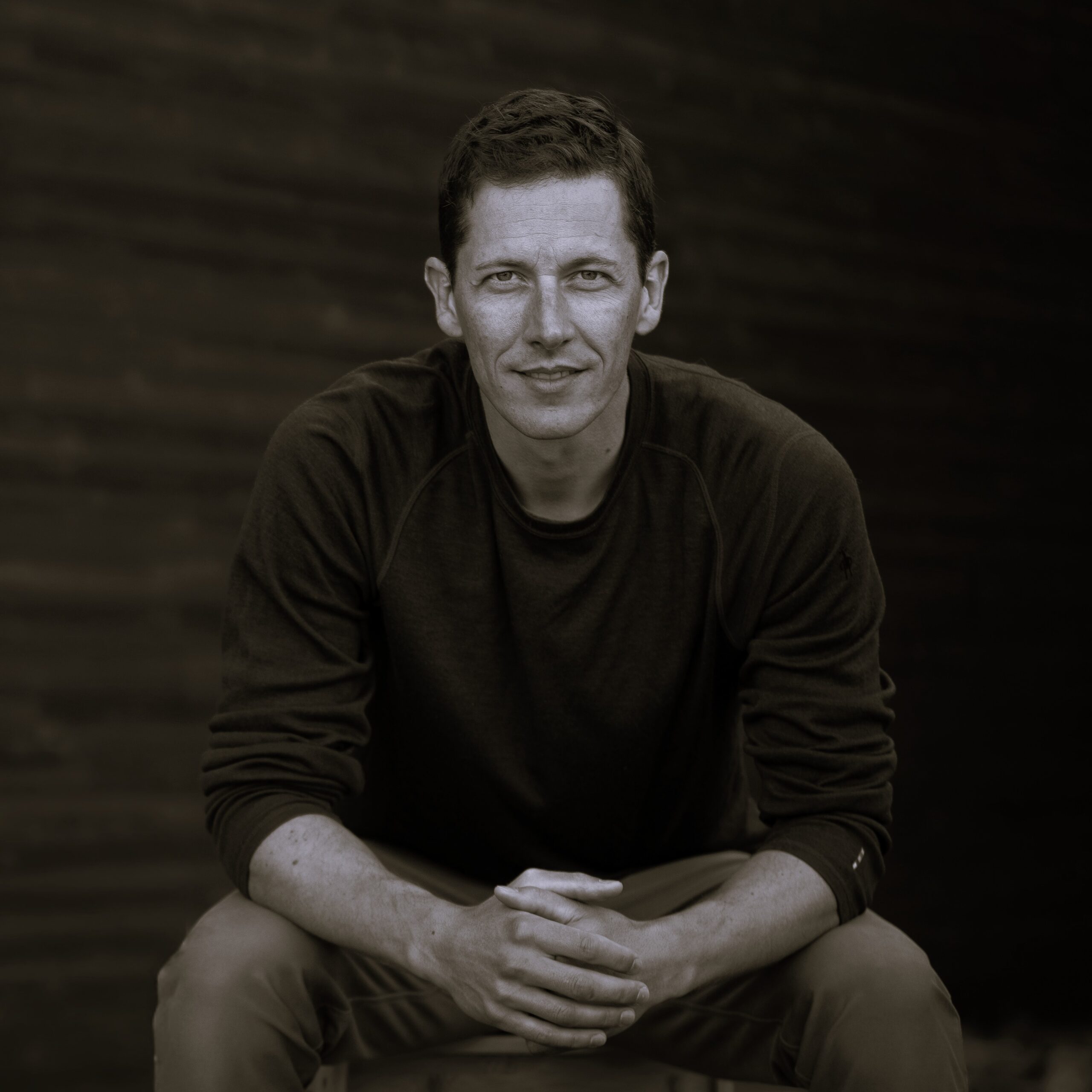
Ryan van der Marel comes to the swamp and brings his wisdom and experience facilitating group conversations for deeper understanding and shared meaning. He shares how he coaches, nudges and holds the space so that groups and teams get to the heart of their aspirations, address their blockages and produce new pathways for collective impact. Anyone who facilitates groups will come away with a few new moves that support group work.
Links:
Ryan’s Website https://ryanvandermarel.com
North Shore Nomads blog: https://nomadsmoto.wordpress.com
Radical Candor: https://www.radicalcandor.com/
15 Commitments of Conscious Leadership: https://conscious.is/15-commitments
Nonviolent (compassionate) communication: https://www.cnvc.org/
Ryan’s Contact Information: info@ryanvandermarel.com
EPISODE 81
[INTRODUCTION]
[0:00:06] ANNOUNCER: You are listening to 10,000 Swamp Leaders, leadership conversations that explore adapting and thriving in a complex world, with Rick Torseth and guests.
[INTERVIEW]
[0:00:20] RT: Hi, everybody. This is Rick Torseth, and this is 10,000 Swamp Leaders, a podcast for regular listeners where we have conversations with individuals who have made a choice of life and career to be in service, I would say, to the common good, oftentimes dealing with very difficult and complex social challenges, environmental challenges, etc. Today is not any exception to that. My guest is Ryan van der Marel, who is coming to us from Whitehorse, Canada, actually, up north of where I am. Ryan, welcome to the podcast.
[0:00:53] RvdM: Thanks, Rick. It’s a pleasure to be here.
[0:00:55] RT: It’s good to have you. Before we get too far into the questions that I prepared and the information you sent along to me, what do you want people to know about you that will help them have context for our conversation?
[0:01:07] RvdM: Sure. As you know, and my primary work right now is I run workshops and retreats on organizational strategy. Often, that ties into culture, because the two are eventually connected. In terms of my backstory and how I got here, it’s a long, non-linear process of grandparents that immigrated to Canada from Africa. That got me interested in development of poor countries, and that’s why I studied international development in undergrad. I went and worked in Africa for a while and realized that a lot of the issues that I was seeing related to the environment.
That turned me on to the environment to spend most of my career life working in large landscape conservation. In an ironic twist, most of the actions that we do towards the environment actually have to do with managing people. I ended up in various planning roles that involved lots of engagement with the public and various sectors and working at the cross-section of conservation and natural resource use and First Nations relationships. That’s background. Like I said, non-linear, lots of detours, short-stop in the tech sector. I worked as a guide for a while, mental performance coach for athletes, and then, interestingly, ended up starting to work with leaders of organizations that do work primarily in the conservation space, but also, I dabble in private sector and do some work for government, too. That’s me.
I would love to insert one thing that I think is probably a little more esoteric and a less mainstream than maybe some of your guests have been, which is, as a result of a concussion that I had nearly a decade ago, I turned to meditation and mindfulness as a way to, I guess, heal. In that journey, have concluded that one of my underlying beliefs and something that drives me in the work that I do is that self-realization, or whatever you want to call it, the growing self-awareness, or awakening self-awareness of the individual, is an endless journey, but it’s real.
I think that most people, given the opportunity and the right tools, can undergo transformational journeys. That journey is something that everyone contributes to in a way to make this world a better place. I think people that grow in self-awareness also grow in their ability to forgive, their ability to hold compassion and love for people, their ability to be more creative, work closer with other people, all those kinds of things. That’s foundational. I see it throughout all my work. I think it might help just create a frame for some of the places this conversation might go today.
[0:03:57] RT: Yeah. It’s a great point, because I know in advance of this conversation, you and I had exchanged on some things, and I read some things. I have some thoughts or questions related to this. I’m glad you’re provoking it right at the outset. Let’s give the listeners a little bit more structured context. Then let’s go to this part that you’re talking about, because I think it is highly relevant. You have a great lead on your website. Change happens one conversation at a time. It’s bold. It’s large font. I believe everything begins as a conversation. I’m curious about the work you’re doing there and why you’ve taken this position. Let’s begin from your perspective. What is potentially available in a conversation that could lead to provoking change?
[0:04:39] RvdM: Yeah. Well, so talk his words, but conversation is not. It’s about reciprocity, respect, consideration. There’s lots about behavior in there. I think where a conversation gains traction is the ability for humans to deepen their connection, relationship, sense of belonging to each other, and to accomplish more together, which, when you look throughout history, all the big things that we’ve done as team humanity have been in our ability to work together. Conversation leads to, I guess, better cooperation, better collaboration, more done, more impact.
[0:05:19] RT: Okay. How do you go about doing that with a group? When you’re in the room with them, what’s the work that you do that has a chance of provoking that into the room?
[0:05:29] RvdM: Yeah. I usually seed my space with some agreements that we come to collectively right up front. Those set some guardrails on how people want the conversation to go, what makes them feel safe in a space, in order to be more vulnerable with each other. You said it earlier, it really comes down to candor. I believe in radical candor, which there’s a whole thing about that that people can check out, and maybe we can throw in the show notes, but radical candor, just being a place where people can be frank with each other, but in a very respectful and considerate way.
I think that everything, we can talk about anything if we know how to do it, and that we should still talk about things, even if we don’t know how. It’s a bit of a paradox. I think that conversation done honestly leads to change, because people want to create a future that’s different than the past, that’s pouring, I think, directly from Peter Block. It’s the line that I believe strongly, and we all see a world that’s riddled with issues. The only way to get to a place is to work together and figure out what that looks like.
[0:06:45] RT: Okay. I’m going to dig a little deeper here. So, the people are in the room. It’s the beginning of the day, and they’ve come for some understanding, oftentimes vaguely characterized for them. They may not be exactly sure whether they’re at some think they know. You have this idea that the way forward is something related to radical candor. What’s the first work that you do to create safety, so people can begin to play with that and actually have the experience in the room that is necessary for them to start binding themselves more tightly together?
[0:07:23] RvdM: Yeah, great question. People usually show up in a great state of discomfort to the workshops that I run, because I leave my agendas very vague. Most people love the certainty of seeing exactly when they’re going to have their first coffee break and what topics will be presented on the PowerPoints, and whatever the case may be, what they’re used to. I don’t do PowerPoint. I host my meetings in a circle format with no tables. Everyone is left facing each other. Everyone can make eye contact with everyone else in the circle. There’s no tables, no laptops, no digital devices that separate anyone from anyone else.
Structuring the space is the first thing. Getting into the uncomfortable space of releasing any type of expectation on structure, or place that we need to go, is another. Then, I actually spend probably a disproportionate amount of time on introductions. I’ll do multiple rounds of introductions, because I think everyone’s been in a meeting where it’s like, okay, say your name, say where you’re from, and say these other three things, and then people forget the first thing and the last thing. I’ll do it in rounds.
We start with a name. Usually, I actually emphasize for people not to say their role right off the bat, because it’s an equalizer. Everyone’s just a human showing up in a space together, willing to engage. Then, yeah, the questions or the introductory pieces get a little more intimate as we go. We may start with where we’re from and then end with a place of what shaped your outlook on the work that you do, or what influences things that you show up with to work, and when you engage with your colleagues. Then, like I said, we do these agreements. That sometimes, depending on the size of the group, can take an hour.
[0:09:11] RT: Yeah. It gets all the voices in the room. People get a chance to be heard, hear their thoughts, and you have some room to then move forward, I would assume.
[0:09:20] RvdM: Yeah. There’s something interesting that happens in the early stages. I think everyone is intuitively aware of this. Everyone is self-regulating and co-regulating. What I mean by that is we’re all doing our own thing as social beings to show up in a certain way, and it’s part of the presence that we bring. On a very different, probably subconscious level for most people, we’re also co-regulating our energies to each other. You can totally feel it in a space when everyone shows up and it’s frenetic. Once you get into a few rounds of these introductions, or into people sharing in a space, the energy, or the vibe, or whatever you want to call it, modulates and settles in, and the room has transformed in that moment.
[0:10:07] RT: Yeah. Your offer to people includes the opportunity to recover meaning in one’s life through conversation. I have a sense this is the beginning of what you’re talking about here when you’re doing your introductions. Expand on that as a focal point in the process you’re doing that affords the possibility that people could discover, or rediscover, meaning in their life that they didn’t have connection with.
[0:10:32] RvdM: Sure. If we go back to what I first said, around self-realization, or self-actualization of the individual is we’re all going around creating our reality in certain ways through choice and doing and through receiving. The meaning that we’re seeking often can be found in these different arenas of our life. If we see work as an arena, if we see our home life or personal relationships as an arena, each of these are opportunities to grow and learn, and they can be expansive in a way. I think the reality, unfortunately, for most people, is that work is seen as this unfortunate reality. I think the way work happens, especially in North America, is an unfortunate reality. This adherence to an absurd 40-hour work week and lots of components about it that we don’t need to go into.
What work affords us is an opportunity to explore our passions and to interact with people in a way that’s structured, but also creates an incredible opportunity for not just self-exploration, but whenever you have more than one situation with humans, then we’re starting to talk about the ability to trust and cooperate. The whole experience, I think, when we talk about the workplaces around moving from isolation, self-interest to connected and caring, but it happens very much. Also, there’s a whole individual journey that people are undergoing, and that’s the one I think that has a lot of meaning for people, or has a potential to.
[0:12:06] RT: Talk a little bit then. How do people have this experience in the room, and then they’re going to leave the room and go back out there to the place that they came from, work-home, culture? How do they hold that together and keep that alive and bring it back to the workplace, say, the next day when Ryan’s not around to guide them through processes and begin to get a foothold on some of the stuff that they experienced in the room?
[0:12:34] RvdM: Yeah, great question. The majority of my work, Rick, is with groups and teams that are units; they work together. That’s fortunate, because it means that everyone then is equipped with a new language, a new way of being with each other, and has gone through this experience together that allows them to hopefully carry it forward. I usually insist on an integration phase after I do workshops and retreats, where I can keep supporting a group as they try to activate some of the new language skills, ways of being candid with each other. That usually works quite well.
Obviously, the tendency is for people to immediately want to snap back to old patterns and old ways of doing things. I think having a little bit of continuity that’s light touch, usually the integration phase, but it certainly seems to help. Generally, I think anyone that’s been to a retreat has had the experience of, or what we know as, peak experiences, where you’re transported to a place that’s so outside of your regular context and your regular way of being that it can be quite destabilizing and disorienting.
Again, I offer myself up to anyone that’s going through a withdrawal. Callie and I used to play Ultimate Frisbee, and we’d go away for these weekends and be playing with the team. It’s super intense because with Ultimate, you’re playing four or five games a day. Then you return to your daily life, where the team, which is felt like family, is gone, and the energy and everything that you had with you disappears. I think the same can be said for a good retreat, or even a good one-day workshop, is that people leave that experience. They’ve got a hole in them, or something’s missing.
I usually, with groups, I insist on an integration phase, where I light touch, but do a bit of hand holding, or support, host event, which prevents people from returning to usual patterns and ways of doing things. I also tell people it’s really about how much you choose to take with you and each conversation, each meeting that they go into if they show up with that same candor, that same ability to really show up as a leader, regardless of what your place is in the organization that that kind of thing done over and over and over again, that consistency compounds and that’s what creates the transformation in the long run.
[0:15:06] RT: This is the way I hear it, so maybe I’m mishearing it. What I hear you say is you’re supporting them through a process where they’re building greater capacity, but you can have some fallbacks when you’re trying to increase the weight, if you will, if you use a weightlifting metaphor. You’re trying to get stronger mentally, emotionally, relationally, and you’re going to have fits and starts, but having somebody there along the way to guide and recognize that and keep them moving is an important function after the retreat, I would think. It’s a leading question, but I feel strongly about that myself personally, so I guess that’s what I’m pushing.
[0:15:41] RvdM: Yeah. I think you’re saying the right thing. The comparison I would draw is with meditation, which might not be a good one for your audience, but anyone that’s done a guided meditation knows that it’s heck a lot easier to stay in the space and maintain a certain level of awareness when you’ve got some gentle prompts and the structure of someone leading you through it. When you’re sitting by yourself on the cushion and doing your own thing, it’s a lot easier for your mind to wander and to do it. The retreat, or workshop experience, I’m the guiding voice. Then once you leave that space, there’s a little bit of trying to then instill some of those new skill sets, or even an expanded awareness of yourself, or the way your team operates, to keep some momentum going.
[0:16:28] RT: Yeah. Let’s go back to how you got us launched here. I’d known about your concussion from, we should say here that I know you through relationships with family and friends long before we ever got to get here. I was aware of your concussion experience, but I also am clear that it’s shaped a little bit about how you go about your work. If you don’t mind, can you share with people whatever is right for you to share about the concussion and then the journey and the insights and the learning that’s come from that that you now use as part of your way you help people?
[0:17:01] RvdM: Yeah, absolutely. Anyone that’s had a concussion knows that it’s an isolating, destabilizing experience. It can be quite scary, because you don’t know what’s happened to your brain, essentially. I had mine through a sports injury. At the time, I was experiencing a lot of cognitive fatigue, was the primary issue that I was having. Typically, if I went to work, I have an eight-hour workday, most people, I could sustain it for maybe that output, that normal output, only for maybe an hour. Then I’d be completely spent brain really not functioning. It took four months for it to really come back to a place where I was able to fully function again, both in work and personal life, and return to sport.
In that time and also in the period that ensued, because once you have an experience like that, it changes you forever. I turned to meditation. I turned to some mentorship and some help. The Western medical system is not well equipped to dealing with traumatic brain injuries. There’s so much about it that we don’t know, we don’t understand, and so much about it that plays into the individual and their response to trauma and our entire emotional makeup.
One of the things that came out of it, through some of the work I was doing, was a new appreciation and understanding of emotions and how emotions operate on the body and how emotions interact with thought. Particularly for me, and I think most people that know someone with a concussion, or have been through it, the mood swings, especially the sometimes irrational anger that shows up, for some reason, whatever has changed in the makeup of the brain, or maybe it’s anger that’s always been lodged there and has suddenly become more accessible. I don’t know. But having to reconcile with some of the more difficult emotions that surface became part of the practice. With that came an appreciation of what emotions can bring. I think emotional literacy is a profoundly underrated skill.
In large part, what I do now is because of the understanding that I have of emotions. I think you would agree that interpersonal dynamics contribute hugely to an organization’s ability to be functioning and strategic. If there’s a thing that undermines interpersonal stuff, it’s people’s emotions. Again, through self-awareness and our ability to harness what our environment is telling us through thoughts and emotion, it can really change from people having reactive, reactionary responses, or thoughtful, considerate, curious responses. That can change the entire nature of a conversation.
[0:20:00] RT: It leads me to questions. I pretty much know you post-concussion. I think I know you entirely post-concussion. I’m curious, and I think listeners might be curious, how are you different as how you show up in the world pre and post? If there’s a prior version and a post version, is there any part of the prior version you wish you still had?
[0:20:24] RvdM: Yeah, great question. I mean, obviously, I’d like to say that I’m a better human. I don’t know if that always feels true to me. But prior to concussion, I was the guy that said, I don’t experience anger. I don’t know it. It’s not part of the breadth of my experience in life. It’s absurd, really, because everyone experiences the full spectrum of emotion. It’s really about how honestly we experience certain emotions. There’s an easy one to block out, because anger is stigmatized, it’s violent, it’s sexualized. It’s all these things that make people really want to hold their distance from it. It’s easy to repress.
I certainly had a lot of that patterning, or conditioning, both of my upbringing. I think it’s pretty typical in the West in general. Anger was the first one that I needed to warm up with. Once I realized, like, oh, anger is an important emotion. Emotions are a source of information about my environment, and anger is one that tells me that I’m out of alignment, then it becomes a superpower.
I think it’s like most things that reside in the shadow is our biggest superpowers are next to our biggest weaknesses, or blind spots, usually. Anger for me is one of those. Mainly because anger is emotion is charged with energy. If you can unleash that energy in a productive way, then there’s a lot there to work with.
[0:21:55] RT: Okay. Let’s help people here. What is the work in the moment? What is the work when you, given what you’ve done, where you are feeling anger, and you make some decision differently, and now “becomes a superpower? Something’s happening in there, and people who are listening who don’t have that move, can you give them any rough understanding of that transition and what’s going on there?
[0:22:20] RvdM: Yeah, sure. I think most people the expression of anger, or one there’s a non-expression, which is we repress it. That’s pretty common. Two is the one that people most often associate with anger, which is the outburst, discharging of anger that way. The third is more subtle, and I think it’s the one I most commonly see in the workplace, which is passive aggressiveness, is people really poorly are expressing what they need. It’s coming off as these passive aggressive statements that everyone, I think, on an energetic level, or on some level, is aware of how much anger there is in the space, and that’s breeding blame and resentment and all that stuff. That’s part of the toxicity of the workplace and some organizations.
I think the power of anger and what I’ve come to understand is there’s a cold, clear assertion of needs, clarity of needs, and then being able to assert those needs that gets you, A, directly to the resolution of the anger, because that’s really all that wants to be heard. Second, brings you closer into alignment with where you want to be and where you’re going. I think being able to, first of all, mindfully create the space where you’re not being buffered by the emotion that’s arising and lashing out, or reacting to the anger. You’re observing it. Once the recognition is there that anger is present, then you have a choice to make on how to use it and where to go with it.
I think that’s the pivotal thing that mindfulness buys you is that moment of choice where you’re either in it and you can’t see outside of it, which means that it’s dominating your experience and it’s working you, or you’re working it and you’re getting to a place consciously of resolution and alignment.
[0:24:25] RT: All right. I’m imagining people who are listening, who are leaders and managers of groups of people, being interested in your description there. They’re experiencing, oftentimes in the room, some forms of that, may be more than one source of it if you have five or six people in there. What do you know about how in a group like that when you are responsible for coordinating activity and work and getting things done? This is part of the dynamic that you’re having to navigate, and they haven’t had the opportunity to travel the road you’ve traveled. What counsel do you have for them about some moves they could make in those situations?
[0:25:01] RvdM: Yeah. I think one is just having a universal language around this stuff. At a very basic level, there’s some formulaic approaches to how you can work through resistances, or difficulties, or anger when those things show up. I don’t know if it’s called much anymore, non-violent communication. I think it’s often called compassionate communication skills, which I think are a double-edged sword, because I’ve seen them weaponized as well.
There’s a formula around speaking to the context and then making it about your experience in that context, rather than making it about what the other person is doing. Anyone can do it, because it’s really obvious when it’s not being done. I’ll give you an example. Someone does something that I’m upset about. I have the courage to say, “Look, when we’re having this conversation, or this meeting happened, and I noticed you raising this topic, or this topic was, whatever the situation was, I felt this.”
It doesn’t always need to be because, again, people sometimes lack the emotional literacy, but it can be as simple as I felt this tightness show up in my chest, or I felt this really strong resistance to it. Turning it inwards into your personal experience with it allows for it to be something that the responsibility is equally shared between the two people. It’s not all about the other person. It’s a recognition that this is about us, not just about you. This is also where it becomes really a growth practice is in a lot of the Buddhist teachings, the practice is to imagine that your worst enemy, or the thing that is triggering you the most, is the Buddha and drag, right? In that moment, can you find the place of compassion and curiosity and the willingness to try and understand what’s going on, rather than being blaming and resentful and reacting that way?
That’s what I coach groups through is being able to seize that opportunity and to work with it. It’s a journey. I mean, people don’t leave even a three-day retreat with the ability to do it well. But the common language, I think, helps, and some common practices. If everyone’s onboarded to them, then it makes the whole system move in that direction. It’s one of the biggest traps is if you run a workshop, or something, and you don’t have the whole team there, because those members that haven’t been there in that experience, then they are not equipped the way the rest of the team is equipped, and that can be really jarring.
[0:27:59] RT: Yeah. You and I host this podcast and generate some resources, materials that people can use as a way to begin to move along in addition, because I think you’re speaking to something that is very experiential and is also experienced oftentimes, and working people that don’t have too many moves and if we can help them with some moves, that’d be great.
I want to shift gears a little bit here, because I know another big focal part for you is the environmental and the conservation work. Talk about that work and how you interface with those causes.
[0:28:32] RvdM: Yeah. Yeah. In my past roles and life, a lot more directly. I mean, I started off out of graduate school, with I was doing – I was a wildlife tech. I was doing habitat assessments and running through the Great Bear Rainforest on the BC coast, and looking for Northern Gothox and encountering bears and that kind of stuff. Then, in between, I spent some time working as a backcountry ranger. Where all of this led me was one, two, I have this passion for large, wild landscapes. Those things are rapidly disappearing off of the face of the earth. It’s one of the things that attracted me to the Yukon. For your listeners that may not know where the Yukon is, we’re right next door to Alaska on the Canadian side. It’s a Canadian territory. It runs all the way up to the Beaufort Sea and the Arctic.
These large tracks of more or less intact landscapes, there’s not many of them left. The Canadian North, Alaska, maybe parts of the Amazon and Russia, but our human footprint on this planet is pervasive and ubiquitous, and growing continuously. In the work I do now, I work with a lot of organizations that have conservation mandate. One of the things I tell them is that their bottom line becomes my bottom line. If I can help them be more strategic to have more impact on the ground, whatever they’re able to accomplish, that’s what I want for them also, and that’s what I want from my work is for them to be more effective.
[0:30:15] RT: Can you give an example of the kinds of projects you work on that interface the human side that you’re helping with with the environment?
[0:30:22] RvdM: Yeah, absolutely. One of the organizations that I’ve had a long-term relationship with now is Wildlife Conservation Society. It’s a global environmental NGO. They’ve got country programs in many, many countries. I was involved for a while with WCS Canada, so the Canadian Country Program. One of the things that WCS Canada experienced was a really rapid growth, where the analogy that people were giving me when I was talking to people on staff about it was it used to feel like the organization was a small cozy cabin and then expanded into this mega mansion with additions and rooms built on that didn’t make sense and people didn’t know how to get to them even. That kind of thing.
As you know, one of the things in the nonprofit sector is that you’re under-resourced in terms of a lot of your operational capacities. Everything that’s administrative, you need to figure out your scraping margins in a small admin line whenever you’re putting in a grant proposal for funding. It’s really hard for them to invest in organization. Development into anything that helps them be strategic, that way, even strategic planning sometimes. I was lucky, their president and chief scientific officer brought me in, and we basically built a process for the organization to start a conversation with itself around, how it imagine itself and how do people within the organization see themselves as well?
Part of the struggle, and Canada, obviously, as you can imagine is it’s a very big country. If you’ve got offices across the country, it’s hard to bring people together. We did an all-staff meeting. It was in Banff, and everyone came for it. There were about 60 people. One of the main things, whenever you’re trying to be strategic about anything, is that it needs to be a participatory process. If staff aren’t involved even at the ground level, and you try to shove a strategy down their throats, it’s going to be met with resistance. As soon as you bring people into the conversation around what do success look like? Where are we going? Who’s doing what? Then people have buy-in, people support it, and it changes the entire tone of it.
That’s probably a good example of one where there was a lot of interpersonal stuff, because these individual programs across the country have become so isolated and resistant to any type of centralized command, let’s say, from the main office in Toronto. But they needed to start to reimagine themselves as one, cohesive organization.
[0:33:16] RT: I want to hear about the North Shore nomads.
[0:33:22] RvdM: Yeah. We’re going back just over a decade now. I was living in Nelson, B.C., which has a North Shore. My brother was living on the North Shore, Vancouver. We had gotten it into our minds that we wanted to ride motorcycles down to the southern tip of Argentina. This is 2014. I was 32. My brother was 30, which is why we chose that year to do it. Yeah, so we left from the respective North Shores of where we were living. Over the course of five months, five and a half months, we rode down to Ushuaia on the southern tip of Argentina, end of the road. I think it was 14 countries, 30,000 kilometers. Yeah. It is transformational in many ways. Very fond of that trip.
[0:34:11] RT: What struck me about it isn’t the adventure in and of itself, which is pretty remarkable, is how did it shape your relationship with your brother and vice versa?
[0:34:24] RvdM: Yeah. My brother and I, I think, as most siblings probably experience at some point, yeah, we had our on and offs growing up. Yeah, times were buddies and times where we really didn’t get along. I should mention, I’ve got a sister too, and she’s fantastic. With three siblings, there’s alliances, and then the other kid gets picked on and all that stuff, and always shifting. When we left home and we each went to university, we didn’t really keep touch for a bit of time. Then after university, we all rediscovered each other as adults that had gone and had their own life experiences.
My brother had also done some traveling in Southeast Asia and Mongolia. My sister had gone on a surfing trip with somebody down to Australia. We just fell in love with each other all over again. This is then where my brother and I started doing a lot of things together. We were mountain bike pals for a long time. We climbed together, did some climbing trips down to the States, Utah, and Joshua Tree, and all that stuff. My brother went through a big breakup, and then we went on this trip together. It was interesting in a few ways. It highlighted for us where we worked really well together and where we still sometimes we’re at odds with just our travel styles and the pace of life, and even some basic life philosophies.
Watching, I think, and he probably saw the same with me, but watching him go through this journey and heal from this breakup that he’d gone through and emerge on the other side as I think with just some more self-assured, calm. My brother is a brilliant guy. Just really solid individual that I just felt that I could count on in every turn as we went on this journey together. That was the big thing that it really solidified that.
Similar to what we’re talking about, peak experiences and leaving those earlier, when we came off the trip and then went back to our own lives, I just felt this huge part of me was missing. It felt like that for a long time, because we didn’t live in the same town anymore. He went back and was charting his career and got into a new relationship. Anyway, so yeah. It was a big hole in me that was challenging for a while. We’re super close, and I love my brother. He’s a great guy.
[0:37:03] RT: Okay. We’re coming down to the end here. I got a couple of questions for you here. We tend to learn more about ourselves through our failures and our successes. Would you mind sharing a failure that you had that’s informed you and helped you discover something about yourself that’s made you more effective in the world?
[0:37:21] RvdM: When I was in my early twenties, I worked at a summer camp. I was the head trip canoe tripper. It was a tripping camp. We ran a lot of programs, big week-long trips into different parts of Ontario. One of the things that was pretty routine on these trips was paddling at night. What we would do is we would go out and on really calm, clear, starry nights, we would just go for these night paddles. You can imagine it, when the water’s like glass and you see the stars reflected below you, and the entire canopy of sky above you is lit up with stars, it feels like you’re floating in the air, and it’s magical. We would do these not all the time, but just when the right situation showed up.
At the time, I was I was in an outdoor program at my high school, where I just graduated from, and the teacher was an adventure racer. I don’t know if you remember Eco Challenge, but it was five-day go a crowd, mountain bike, teams of four. I’d gotten excited about adventure racing, and there’s a big component of night travel in it. You learn how to do it safely. It’s all about all the upstream calculations that you make to have it be a safe experience.
The kids I was doing it with are, they’re 12 to 15, so they’re capable there. They’re enjoying themselves, too. Anyways, ultimately, what happened is the camp director found out about it. I think through a parent who had heard it from their kid. He wasn’t impressed. He fired me within with half an hour to leave the premises. It was quite intense. I had to gather at my things and basically, my parents weren’t around at that time. I actually called that teacher who had inspired the adventure racer, who inspired the night traveling in the first place. I called him and he came and picked me up.
It was in that moment where I realized the importance of having those people in your life that will stand by you and support you no matter what. When you’re either being your worst self, or you’re in your darkest moments that they will be there and hold a space for you with the compassion, or whatever that you’re needing in that moment. Sometimes it’s a bit of tough love. I think having those people in your life and knowing who they are, and probably, actually even acknowledging them every now and then, is a really good practice and a good thing.
[0:40:06] RT: It’s a wise move. All right. Let’s turn different here. What are your gifts, talents, and unused potential? This is a chance to brag a little bit. Different gifts, or difference in talents, and potential that you haven’t yet utilized.
[0:40:20] RvdM: Yeah. A gift that I have that I didn’t realize that I had is this ability to hold space for large groups. I’m an introvert. Maybe that’s the gift. I self-identify as an introvert. I need a big-time recharge after I’m in an overly socially charged situation. I do seem to have a knack for holding space for groups to become more intimate with each other, say not romantically, but in a vulnerable, productive sense, where people are able to break through tensions and things that have been holding them back sometimes for years. That’s something I recognized and that I can own that I do well.
Unrealized potential, I think, as my personal journey evolves, there’s a part where I have this philosophy that if you follow your heart, that the universe will shift in your favor to help you achieve those dreams. I’ve never really stressed about where I was going, or where I was going to end up. I never imagined myself here. I love what I do every day. I don’t think of it as going to work, which I think is the marker of finding your soul’s work, so to speak. The unrealized potential is one, I don’t fully know, but I have a sense that in the future, I would love to host more retreats that are more immersive, where I think there’s this line between what organizations will tolerate in the space that I’m alluding to of almost, I hesitate to use the word love, because when I say love, people think I mean what they mean by love. It’s a word that’s people shy away from it definitely in a workspace context.
Really, to bring people into this understanding that everything we’re doing is about growing our ability to hold compassion, to forgive, to let go, and to enter into this co-creative space with each other, of really, there’s so many things the world needs, and there’s so much potential and opportunity out there. I hold hope, even though sometimes I find that hard to do, but I think opening people to the possibility that they can really love what they do, love who they’re working with, and the teams that they’re creating, and the impact that they’re having on the world.
In so doing, also really love this planet that we’re all living on and sharing together, because ultimately, it’s the only home we’ve got. The more you feel connected to it, I think, the more people will be inclined to take the right steps to help keep it healthy, keep it ours, and keep us on it.
[0:43:19] RT: Ryan, thank you for the work you’re doing. In pursuit of all of that, it’s been a pleasure to have you on the podcast. Thank you very much.
[0:43:25] RvdM: Rick, it’s been a pleasure. Thank you so much for inviting me. I look forward to our future chats.
[0:43:30] RT: Okay, man.
[END OF INTERVIEW]
[0:43:33] ANNOUNCER: Thank you for listening to 10,000 Swamp Leaders with Rick Torseth. Please, take this moment and hit subscribe to follow more leadership swamp conversations.
[END]